Pes Planus (flat feet) and Plantar Fasciitis (runner’s heel): VA Ratings, Benefits, and Compensation

CCK Law: Our Vital Role in Veterans Law
Due to the intense physical nature of military service, many veterans end up developing foot conditions like flat feet (pes planus) and plantar fasciitis (sometimes known as “runner’s heel”). These two disabilities often go hand in hand, and veterans suffering from them can find it harder to exercise, walk around their home, or participate in the activities of daily living.
If you are a veteran dealing with pes planus and plantar fasciitis, then you may be entitled to compensation and other benefits from the Department of Veterans Affairs (VA). This article will explain the disability claims process for securing a pes planus and/or plantar fasciitis VA rating.
Key points of this article include:
- Pes planus (flat feet) can place extra strain on the heel of the foot, leading to the development of plantar fasciitis. This often leads to these conditions being closely interconnected.
- There are several methods one can use to earn a pes planus and plantar fasciitis VA rating. They can be pursued as separate ratings, lumped together under the same rating, or one can be claimed on a secondary basis to the other.
- Pes planus can be either unilateral (i.e., affecting only one foot) or bilateral (affecting both feet). Typically, bilateral pes planus VA ratings tend to be higher than unilateral, since they more severely impact a veteran’s mobility.
What Is Plantar Fasciitis?

Plantar fasciitis is a common condition of the foot in which the plantar fascia, a thick band of tissue running across the bottom of the foot connecting the heel bone to the toes, becomes inflamed. Plantar fasciitis can make walking and other physical activities significantly more difficult.
The plantar fascia acts as a shock absorber and supports the arch of the foot. When the tissues are overstretched and overused, tears can occur. Repetitive stretching and tearing of the plantar fascia can result in symptoms like:
- Shooting or stabbing pain in the bottom of foot
- Pain that worsens with standing
- Pain that can be worse in the morning
- Swelling in the heel
- Tightened Achilles tendon
With proper care and/or treatment, many cases of plantar fasciitis resolve within one year. However, in some cases, it can become a chronic condition.
Causes and Risk Factors
There are several common causes and risk factors that lead to plantar fasciitis, including:
- Working or exercising on hard or uneven surfaces
- Exercising without stretching
- Persistent use of ill-fitting shoes or shoes with poor arch support
- Prolonged exercise
- Sudden weight gain
- Drastic changes in activity levels
- Tightened Achilles tendons
Another condition that may cause or exacerbate plantar fasciitis is pes planus.
What Is Pes Planus?
Pes planus, often referred to as flat feet, is a common foot deformity in which the arch of the foot is flattened to the point where it touches, or nearly touches, the ground.
Ligaments and tendons from the lower leg and the foot form the arches in feet. When these tendons do not pull properly, the foot has little or no arch, resulting in flat feet.
The effects of flat feet can vary from case to case. Most of the time, pes planus does not cause serious symptoms, and treatment may not be necessary. However, those with more severe cases may experience symptoms such as:
- Feet tiring out easily
- Aches or pains in the areas of the arches or heels
- Foot swelling
- Difficulty performing certain foot movements, such as standing on toes
- Leg and back pain
Pes planus may also aggravate or lead to plantar fasciitis.
Causes and Risk Factors
Common causes and risk factors for developing flat feet include:
- A foot abnormality present since birth
- Torn or stretched tendons
- Inflammation or damage to the posterior tibial tendon which runs from the lower leg down to the ankle, and to the middle of the arch of the foot
- Dislocated or broken bones in the legs or feet
- Health conditions (e.g., rheumatoid arthritis)
- Nerve damage, such as from peripheral neuropathy
Other risk factors, such as obesity and partaking in frequent high-impact physical activity, like military training, may also lead to the development of flat feet.
What Is Bilateral Pes Planus?

“Bilateral” pes planus is simply the term VA uses to describe when both of a veteran’s feet are affected by pes planus, as opposed to only one foot (unilateral). Bilateral pes planus VA ratings are covered under a broader VA rule called the bilateral factor. Dallas Aguiar, an Accredited Claims Agent at CCK Law, explains this rule:
“The bilateral factor refers to when a veteran has a disability that affects both arms, both legs, or paired skeletal muscles. In these instances, the ratings for a veteran’s left and right sides will be combined, and 10 percent will be added.”
Notably, for this rule to apply to a bilateral pes planus VA rating, both of a veteran’s feet must receive a disability rating of at least 10 percent. If one or both of their feet are rated at 0 percent, then the bilateral factor will not take effect.
Just as well, it is important to keep in mind that VA uses a formula often called “VA math” to calculate a veteran’s total bilateral pes planus VA rating. They will not simply add the percentages for each foot together.
How Are Pes Planus and Plantar Fasciitis Connected?
Often, pes planus can significantly raise the risk of a veteran developing plantar fasciitis. As Accredited Claims Agent Dallas Aguiar explains:
“Pes planus can be an aggravating factor for plantar fasciitis, as having flat feet can place more pressure on the heels, the strain of which can worsen plantar fasciitis.”
Similar findings have been put forth by the National Institute of Health, which claims that pes planus can cause an increased strain at the origin of the plantar fascia. This enhanced strain can go on to cause or worsen plantar fasciitis.
Additionally, service members or civilians who work in fields that require them to stand or run for extended periods also face an increased risk of developing pes planus or plantar fasciitis. As Dallas goes on to explain:
“Pes planus and plantar fasciitis in veterans could also be linked to long periods of time spent standing, certain forms of exercise, and performing intense repetitive activity in footwear like boots.”

How Do Veterans Earn a Pes Planus and Plantar Fasciitis VA Rating?
To earn a pes planus and plantar fasciitis VA rating, a veteran must first service establish service connection (i.e., they must prove that their disabilities are caused by military service). There are several ways to accomplish this: direct, secondary, and presumptive.
Direct Service Connection for Pes Planus and Plantar Fasciitis
Direct service connection is when a veteran’s military service either directly caused the veteran to develop their conditions or substantially aggravated their preexisting conditions to the point they became worse than they otherwise would. To prove direct service connection, a veteran typically must provide three key pieces of evidence:
- A current medical diagnosis for flat feet and/or plantar fasciitis;
- Evidence of an in-service event, injury, or illness; and
- A medical nexus, or link, connecting the veteran’s foot condition(s) to the in-service event.
For veterans who believe their foot conditions may share an in-service cause, then pursuing direct service connection may be the best way for those veterans to earn pes planus and plantar fasciitis VA ratings.
For example:
- Say a veteran suffers a fall during their military service, which leads to both of their Achilles tendons being injured. Though the injuries heal, the veteran sometimes feels pain in their feet when walking.
- Years after being discharged from the military, the veteran develops pes planus and plantar fasciitis, both of which are diagnosed by their doctor. The doctor provides their opinion that the in-service fall is “at least as likely as not” the cause for these new conditions, since torn Achilles tendons can lead to both pes planus and plantar fasciitis.
- In this case, the veteran may be able to argue with VA that their foot conditions were directly caused by the fall they suffered during military service. If their claim is successful, then they can earn pes planus and plantar fasciitis VA ratings.
Notably, depending on the specifics of a veteran’s symptomology, the VA rating they would earn in the above scenario could take a few different forms. They could earn a separate VA rating for each condition, or VA may decide that their symptoms are not distinct enough to warrant two different ratings and may lump together both conditions under the same rating.
Secondary Service Connection for Pes Planus and Plantar Fasciitis
Secondary service connection is when an already service-connected condition causes a separate condition to develop. In this case, if a veteran is service connected for pes planus and later develops plantar fasciitis because of it, they can file a claim for plantar fasciitis secondary to pes planus.
For example:
- Say a veteran suffers an ankle injury during their military service. After being discharged, their doctor eventually diagnoses them with flat feet. VA recognizes that the veteran’s condition was caused by their in-service ankle injury and assigns them a rating and compensation.
- Years later, the veteran’s flat feet worsen, eventually causing the veteran to develop plantar fasciitis, which the veteran’s doctor links back to their pes planus diagnosis.
- In this case, the veteran would be able to file a claim for plantar fasciitis secondary to pes planus, since their service-connected flat feet were the root cause of their developing this new condition. If the veteran’s claim is successful, they may earn a VA rating for plantar fasciitis.

What Evidence Do I Need to Submit to Earn a VA Rating?
When seeking service connection for foot-related conditions, the strength of the evidence provided often plays a major role in how VA decides the claim. Veterans may improve their chances of approval by submitting certain important types of documentation, including:
- Military Records – These files can demonstrate how a veteran’s current health issues link back to events or conditions experienced during service. They may include in-service medical evaluations, personnel paperwork, separation or discharge papers, and other official records from the veteran’s time in the military.
- Medical Records – Comprehensive medical documentation is essential to confirm both a veteran’s diagnosis and the care they continue to receive. This can include treatment notes from VA hospitals, records from private doctors, or written statements from medical providers familiar with the veteran’s condition.
- Lay Evidence – Lay evidence, which includes lay statements and buddy statements, refers to personal statements for a VA claim written by a veteran or someone familiar with the veteran’s situation. These statements can strengthen a veteran’s case and fill in the gaps if any key information is missing from medical records.
It is important to keep in mind that veterans are not expected to gather all this evidence on their own. VA is actually tasked with a “duty to assist” in helping veterans gather the information needed to support their claims. This is intended to make the claims process simpler and less time-consuming for veterans.
Compensation & Pension (C&P) Exams for Pes Planus and Plantar Fasciitis
A Compensation and Pension (C&P) exam is a medical assessment performed either by a VA clinician or by a medical contractor working for VA. These exams play a central role in the claims process, as they help establish whether a veteran’s condition is linked to service. The findings from the exam also guide VA in assigning a disability rating once service connection has been established.
While C&P exams for foot conditions may look different depending on the severity of the symptoms and the examiner’s approach, veterans can generally expect the process to include the following:
- A physical exam portion where the examiner inspects the veteran’s feet for obvious symptoms of flat feet and plantar fasciitis. They may also ask the veteran to walk around so they can observe their gait and determine how severely the veteran’s disabilities affect movement.
- A questionnaire portion where the examiner asks the veteran about the extent to which the veteran’s disabilities impact their life. This may include questions on whether the veteran is able to exercise, work, or even move about their home comfortably. The examiner may also ask about any in-service events that may have contributed to the veteran’s conditions.
- Lastly, the examiner may order medical tests like X-rays, MRIs, CT scans, or ultrasounds to confirm the veteran’s diagnosis of pes planus and plantar fasciitis.
Plantar Fasciitis and Bilateral Pes Planus VA Ratings
VA rates both pes planus and plantar fasciitis under 38 CFR § 4.71a, the Schedule of Ratings for the Musculoskeletal System. The diagnostic codes and criteria for plantar fasciitis and pes planus VA ratings are as follows:
Plantar Fasciitis VA Rating
VA rates plantar fasciitis under 38 CFR § 4.71a, diagnostic code 5269. Ratings range from 10 to 30 percent – if the plantar fasciitis is affecting both feet and not responding to treatment, veterans will generally receive a higher rating. The specific criteria for each VA rating are:
- 30 percent – If the veteran has no relief from both non-surgical and surgical treatment; bilateral.
- 20 percent – If the veteran has no relief from both non-surgical and surgical treatment; unilateral.
- 10 percent – For all other plantar fasciitis cases; unilateral or bilateral.
VA also notes that if a veteran’s plantar fasciitis results in the loss of use of the foot, they will receive a 40 percent rating.
Unilateral and Bilateral Pes Planus VA Ratings
VA rates flat feet under 38 CFR § 4.71a, diagnostic code 5276. Veterans can be rated between 0 percent and 50 percent on a scale of mild (least severe) to pronounced (most severe). The rating criteria are as follows:
- Pronounced: If veteran experiences marked pronation, extreme tenderness of plantar surfaces of the feet, marked inward displacement and severe spasm of the Achilles tendon on manipulation, and their condition is not improved by orthopedic shoes or appliances:
- 50 percent for bilateral
- 30 percent for unilateral
- Severe: Veterans with medical evidence showing clear deformity of their foot, pain and/or swelling on use or manipulation, and characteristic callosities:
- 30 percent for bilateral
- 20 percent for unilateral
- Moderate: If a veteran’s weight-bearing line is over the big toe rather than spread across the entire foot, there is inward bowing of the Achilles tendon, and pain on manipulation or use of the foot:
- 10 percent for both unilateral and bilateral
- Mild: Veterans with flat feet who use arch supports to successfully relieve their symptoms are considered to have a mild, non-compensable condition and are rated at 0 percent.
What Will My Pes Planus and Plantar Fasciitis VA Rating Look Like?
Depending on how a veteran approaches VA’s claims process, their eventual plantar fasciitis and bilateral pes planus VA ratings could take multiple forms. These include:
- One rating that combines both disorders – VA has rules in place to prevent “pyramiding,” or being rated several times over for the same symptoms. Therefore, if a veteran’s flat feet and plantar fasciitis present similar or identical symptoms to each other, VA may just lump together both conditions under the same rating.
- A separate rating for each disorder – If a veteran’s flat feet and plantar fasciitis each present distinct symptoms, affect separate areas of the foot, or require different treatments from one another, then VA may assign the veteran a rating for each condition. Subsequently, these ratings would be combined using VA math to calculate the veteran’s total rating.
- One primary rating and one secondary rating – If a veteran believes that their already service-connected flat feet may be the root cause behind their plantar fasciitis, then they may be able to pursue a disability rating for plantar fasciitis on a secondary basis by linking it to their primary pes planus claim.
Compensation for Pes Planus and Plantar Fasciitis VA Ratings
Generally, the higher the disability rating VA assigns, the greater the monthly benefit a veteran will receive.
As of 2026, the VA disability rate benefit amounts are as follows:
- 0 percent disability rating: $0.00 per month
- 10 percent disability rating: $180.42 per month
- 20 percent disability rating: $356.66 per month
- 30 percent disability rating: $552.47 per month
- 40 percent disability rating: $795.84 per month
- 50 percent disability rating: $1,132.90 per month
- 60 percent disability rating: $1,435.02 per month
- 70 percent disability rating: $1,808.45 per month
- 80 percent disability rating: $2,102.15 per month
- 90 percent disability rating: $2,362.30 per month
- 100 percent disability rating: $3,938.58 per month
In addition, veterans who have eligible dependents—such as a spouse or children—may qualify for supplementary monthly benefits, which can further raise the total amount they receive.
Special Monthly Compensation
Special Monthly Compensation (SMC) is an enhanced VA benefit designed for veterans who experience serious disabilities or complex health conditions. It offers increased monthly payments to help address needs that standard disability compensation does not always cover.
For some veterans, pes planus and plantar fasciitis can become so severe that they result in significant impairment. In those situations, VA may award additional compensation through SMC to reflect the greater impact on the veteran’s health and daily life.
Another path to SMC for foot-related conditions involves what VA calls “loss of use.” This term applies when a limb’s remaining function is considered no better than if it were removed and replaced with a prosthetic. Importantly, an actual amputation is not required—VA evaluates how much function remains in the limb, such as the hands or feet.
When reviewing foot-related claims, VA focuses on whether the veteran retains the ability to carry out key movements like balance and propulsion. If VA determines that one or both feet can no longer perform these functions, the veteran may qualify for SMC.
TDIU for Pes Planus and Plantar Fasciitis
If your pes planus and plantar fasciitis contribute to preventing you from working, you may be eligible for total disability based on individual unemployability, or TDIU. To qualify for TDIU, which offers monthly compensation equal to a 100 percent rating, veterans must prove they are unable to obtain and maintain substantially gainful employment due to their service-connected condition(s).
In this case, veterans must show that their conditions like pes planus and plantar fasciitis prevent them from securing such employment. Veterans can learn more about how to qualify for TDIU benefits here.
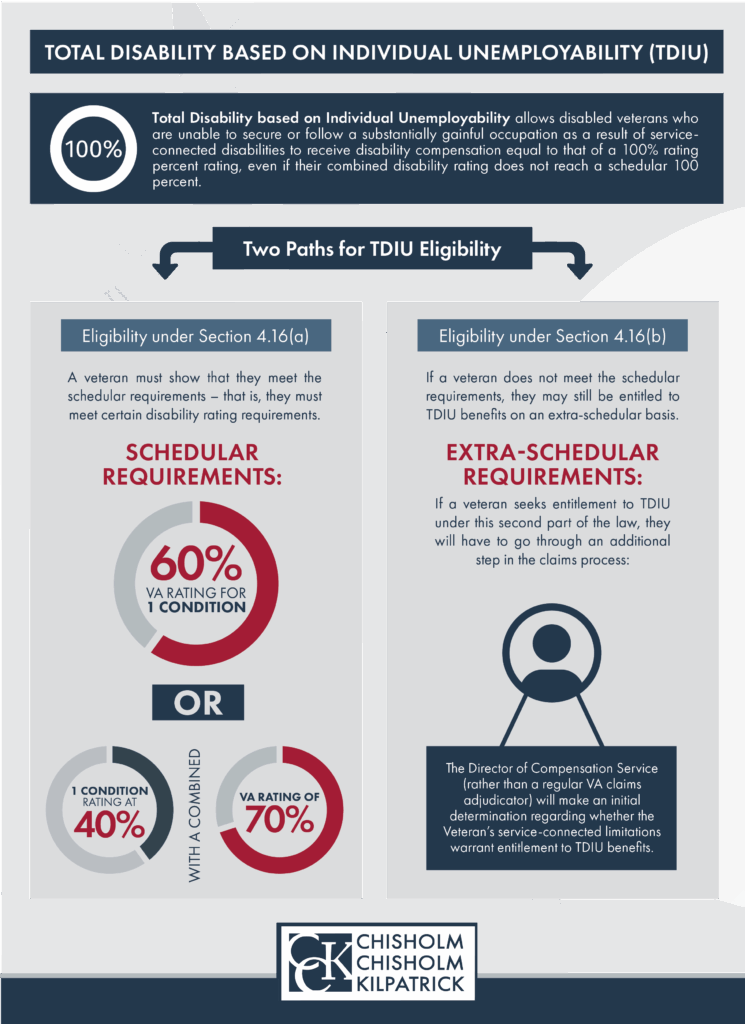
TDIU claims can be confusing and complex, but enlisting the help of a VA-accredited attorney can make the process much easier to handle. If you need support for your TDIU claim, consider reaching out to CCK Law for a free case evaluation with a member of our team.
Was Your VA Disability Claim Denied?
If you were denied or underrated for a pes planus or plantar fasciitis VA rating, then Chisholm Chisholm & Kilpatrick may be able to help you appeal the decision. As of 2025, the accredited attorneys and claims agents at CCK Law have successfully represented over 36,000 veterans before VA, the Board of Veterans’ Appeals, and the Court of Appeal for Veterans Claims (CAVC), and we may be able to put our experience to work for you.
To discuss your case with us, reach out to CCK Law today at (800) 544-9144 or through this online contact form.