
Sleep Apnea VA Ratings and Compensation
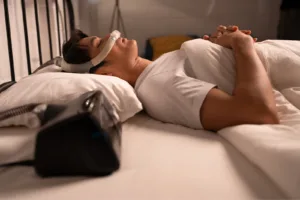

To get a sleep apnea VA disability rating, you must provide a formal medical diagnosis (usually from a sleep study) and evidence that military service may have caused or worsened the condition. Possible ratings are 0, 30, 50, or 100 percent based on symptom severity and equipment use.
Key takeaways of this article include:
- To earn a sleep apnea VA rating and disability compensation, veterans must first establish service connection. This is when a veteran shows VA that their sleep apnea was likely caused by their military service.
- Once service connection is established, VA will assign the veteran a disability rating of 0, 30, 50, or 100 percent disabled. As of 2026, if a veteran is forced to use a CPAP machine to treat their apnea, they will earn an automatic 50 percent rating.
- VA has proposed significant changes to the rating criteria for sleep apnea. These changes would make it more difficult to earn sleep apnea VA ratings higher than 0 percent. Reporting from early–mid 2026 indicates the rule is paused with no final rule or effective date. Claims that were completed or in progress before the changes will be able to use the earlier rating criteria if more favorable.
Who We Are: Chisholm Chisholm & Kilpatrick (CCK Law) has argued many of the cases that define and clarify veterans disability law. Our attorneys serve in many leadership positions and have posted more than 2,500 blogs and 1,100 videos explaining veterans benefits. With 100+ individuals accredited by VA or admitted to practice before the U.S. Court of Appeals for Veterans Claims, CCK Law has recovered over $1 billion in compensation for 36,000+ clients since 1999. (Past results do not guarantee future outcomes.) Contact us to tell us about your case.
What Are the Potential Sleep Apnea VA Ratings?
Veterans can earn sleep apnea VA ratings of 0, 30, 50, or 100 percent based on the severity of their condition, which then determines benefits like compensation. These sleep apnea VA ratings are evaluated under 38 CFR § 4.97, Diagnostic Code 6847 — Sleep Apnea Syndromes (Obstructive, Central, Mixed):
| Sleep Apnea VA Ratings | Sleep Apnea Rating Criteria |
| 100 percent | The veteran has chronic respiratory failure with carbon dioxide retention, requires a tracheostomy, or has cor pulmonale (i.e., the enlargement or failure of the right side of the heart due to lung disease). |
| 50 percent | The veteran requires the use of a breathing assistance device, such as a CPAP machine. |
| 30 percent | The veteran is experiencing persistent daytime hypersomnolence (i.e., a condition characterized by chronic daytime sleepiness that does not improve even with sufficient sleep).
|
| 0 percent | The veteran has a documented sleep disorder, but their condition is currently asymptomatic (i.e., not producing symptoms). Although considered noncompensable, the veteran may still qualify for other benefits, such as VA health care. |
As of 2026, the VA disability rate benefit amounts for sleep apnea are as follows:
- 30 percent disability rating: $552.47 per month
- 50 percent disability rating: $1,132.90 per month
- 100 percent disability rating: $3,938.58 per month
A VA sleep apnea rating of at least 30 percent or higher qualifies you for additional compensation if you have a spouse, dependent children, or dependent parents living in your home.
Will the VA Sleep Apnea Rating Criteria Change?
Yes, it is possible that the VA sleep apnea rating criteria may change in the near future. This is because VA has proposed updates to these rating criteria, as well as the criteria for tinnitus and mental health disorders.
VA first proposed these changes in February 2022 (87 FR 8474) and revised them in a supplemental proposed rule in September 2024 (89 FR 74162). As of August 2026, VA has not published a final rule and has not set an effective date.
What Is the Difference Between the Current and Proposed VA Sleep Apnea Rating Criteria?
Under VA’s proposed new criteria, disability ratings for sleep apnea would be determined based partly on how symptomatic a veteran’s apnea remains after receiving treatment. In other words, the use of a CPAP machine would no longer guarantee that a veteran receives an automatic 50 percent rating for their condition.
| Sleep Apnea VA Rating | Current Sleep Apnea Rating Criteria | Proposed New Sleep Apnea Rating Criteria |
| 100 percent | The veteran has chronic respiratory failure with carbon dioxide retention, requires a tracheostomy, or has cor pulmonale (i.e., the enlargement or failure of the right side of the heart due to lung disease). | Treatment ineffective (as determined by sleep study) or unable to use treatment due to comorbid conditions; and end-organ damage. |
| 50 percent | The veteran requires the use of a breathing assistance device, such as a CPAP machine. | Treatment ineffective (as determined by sleep study) or unable to use treatment due to comorbid conditions; and without end-organ damage. |
| 30 percent (under current criteria) or 10 percent (under new criteria) | The veteran is experiencing persistent daytime hypersomnolence (i.e., a condition characterized by chronic daytime sleepiness that does not improve even with sufficient sleep).
|
Incomplete relief (as determined by sleep study) with treatment.
|
| 0 percent | The veteran has a documented sleep disorder, but their condition is currently asymptomatic (i.e., not producing symptoms). Although considered noncompensable, the veteran may still qualify for other benefits, such as VA health care. | Asymptomatic with or without treatment. |
Based on these proposed new criteria, it may actually become harder for veterans to earn a sleep apnea rating of 10 percent or higher, as those ratings would be reserved for veterans whose sleep apnea does not respond effectively to treatment like CPAP, or who have comorbid conditions that prevent treatment in the first place.
Watch a 2025 update from CCK Law partners and attorneys about VA’s proposed changes to sleep apnea, tinnitus, and mental health ratings:
FAQ: VA Sleep Apnea Rating Changes
CCK Law’s attorneys respond to some of the most common questions about VA’s proposed changes (and the delays).
- How will we know when VA is going ahead with the sleep apnea changes? “If and when these implementations take place, there will be a 60-day notification window,” says Alyse Phillips, a VA-accredited supervising attorney at CCK Law. “That’s going to be a grace period where veterans will have time to get anything filed they want to file before the implementations take place.”
- Will existing sleep apnea claims be “grandfathered in”? Yes. “If you do file a claim before these implementations take place, then the more favorable version of the law will apply to you,” says Alyse Phillips.
- Could VA’s proposed changes to sleep apnea still change? It is possible. VA’s sleep apnea rating changes were first proposed in February 2022 and have still not been implemented. It is possible that VA may be reworking or even planning to dispense with them. But we find it more likely that the updated criteria will come into effect sometime in 2026.
What Is Sleep Apnea?
“Sleep apnea is a potentially serious sleep disorder in which a person’s breathing is repeatedly interrupted throughout the night,” says Michael Lostritto, partner at CCK Law. “There are three main types of sleep apnea: obstructive sleep apnea, central sleep apnea, and also what’s known as complex or ‘mixed’ sleep apnea.”
- Obstructive sleep apnea (OSA) — The most common form of this condition. If you have OSA, then the airflow into your lungs is disrupted due to an issue with your throat muscles.
- Central sleep apnea (CSA) — If you have CSA, it means your brain is not sending the right signals to the muscles that control your breathing.
- Treatment-emergent central sleep apnea, or “complex sleep apnea” — This occurs when a person suffers simultaneously from OSA and CSA. Also known as “mixed sleep apnea.”
Symptoms can include loud snoring, gasping for air while sleeping, difficulty remaining asleep (i.e., insomnia), irritability, dry mouth upon waking, and more. These symptoms can greatly impact your daily life, so treatment is necessary.
Treatment often includes the use of a device called “CPAP,” or “continuous positive airway pressure.”
How Is Sleep Apnea Service Connected on a Direct Basis?
Veterans can establish direct service connection for sleep apnea by proving that their condition was directly caused or aggravated by their military service. To prove direct service connection, veterans must show evidence of the following:
- A current diagnosis of their condition, as confirmed by a sleep study;
- An in-service event, injury, or illness (often demonstrated with service records, medical records from during service, and/or lay statements from fellow service members, family members, etc.); and
- A medical nexus, or link, between their diagnosed condition and the in-service event, injury, or illness (provided by a medical professional).
Watch CCK Law Partner Jenna Zellmer and colleagues discuss strategies for winning a VA sleep apnea claim:
What Qualifies as a “Current Diagnosis” for VA Sleep Apnea Claims?
VA generally requires a formal sleep study (polysomnography) to recognize a current diagnosis of obstructive, central, or mixed sleep apnea.
- Without a sleep study, VA and the CAVC have repeatedly noted that symptoms like snoring or fatigue are not sufficient to establish a diagnosis.
- See 38 CFR § 3.159(a)(1) (competent medical evidence) and Jandreau v. Nicholson, 492 F.3d 1372 (Fed. Cir. 2007) (laypersons are competent to report observable symptoms but not complex medical diagnoses).
What Qualifies as an “In-Service Event, Injury, or Illness” for VA Sleep Apnea Claims?
To pursue a sleep apnea VA rating, a veteran must identify something that occurred during service that can plausibly be linked to their current diagnosis. Some potential in-service causes for sleep apnea include:
- Exposure to environmental hazards that caused upper airway inflammation (dust, burn pits, chemicals)
- Traumatic brain injuries (TBIs)
- Nasal trauma or facial injuries
- Respiratory infections
Additionally, certain sleep apnea symptoms that a veteran develops during service may serve to support their disability claim, so long as they can get witnesses to attest to the symptoms. These symptoms might include:
- Loud snoring
- Witnessed apneas
- Frequent awakenings
- Excessive daytime sleepiness
- Non-restorative sleep
- Weight gain or changes in physical condition during service
These symptoms are often not diagnosed as sleep apnea during service, but they are still usable evidence if mentioned in service treatment records or described by “lay evidence.”
What Does VA Consider a “Nexus” for Sleep Apnea Claims?
A nexus usually takes the form of a medical opinion written by a veteran’s doctor that draws a connection between an in-service event (e.g., nasal trauma) and the veteran’s current diagnosis of sleep apnea.
Typically, a nexus requires competent medical evidence explaining why the veteran’s current sleep apnea is at least as likely as not related to service. This is often the hardest element for veterans to prove to VA for their sleep apnea claims.
Ideally, a strong nexus opinion:
- Reviews the claims file
- Addresses lay reports of in-service symptoms (Dalton v. Nicholson, 21 Vet. App. 23 (2007))
- Explains why in-service snoring, gasping, or sleep disturbance are medically consistent with undiagnosed sleep apnea
- Cites medical literature (upper airway anatomy, weight gain, trauma, environmental exposures)
Watch CCK Law Partner Maura Black cover how to get a nexus opinion for sleep apnea claims:
What Other Evidence Will VA Consider For a Sleep Apnea Claim?
To prove service connection and earn a disability rating for sleep apnea, veterans can submit a variety of different evidence to VA, including:
- Official service records (e.g., personnel records, in-service medical records)
- Medical records (e.g., VA medical records, private medical records, post-service sleep studies)
- Medical or “nexus” opinions from a private doctor
- Employment records (e.g., performance evaluations, disciplinary reports)
- Lay statements (i.e., personal statements from family or friends testifying to the severity of the veteran’s sleep apnea)
- Documentation of a sleep disturbance that occurred shortly after service
Notably, VA will also likely require veterans to take part in a sleep study to confirm their sleep apnea diagnosis.
How Is Sleep Apnea Service Connected on a Secondary Basis?
Frequently, a veteran’s sleep apnea is not caused by military service but is a secondary or residual effect of a separate condition that VA has already deemed service connected. This is called secondary service connection and is eligible for compensation.
Veterans seeking secondary service connection for sleep apnea must provide a medical nexus opinion linking their sleep apnea to this already-service-connected disability.
For example:
- Say a veteran was exposed to toxic smoke from a military burn pit while they were deployed overseas. After being discharged, the veteran still experiences regular congestion and inflammation in their nasal lining, which sometimes makes it difficult to breathe.
- Eventually, a doctor diagnoses the veteran with chronic rhinitis. Subsequently, VA recognizes that the veteran’s rhinitis is directly related to their burn pit exposure and assigns them a VA rating and compensation for this condition.
- Over time, the veteran finds that their chronic rhinitis has worsened, and they suddenly develop trouble sleeping. Their doctor confirms that the veteran has developed sleep apnea, likely as a result of their rhinitis.
- In this case, the veteran would be able to file a disability claim for sleep apnea secondary to chronic rhinitis. This is because their rhinitis (an already service-connected condition) seems to have caused a secondary condition to develop (sleep apnea).
- If the veteran’s secondary claim is successful, VA will assign them a disability rating for sleep apnea and compensate them accordingly.
A 2021 study showed an increase in risk factors for cardiovascular diseases in people diagnosed with obstructive sleep apnea. Additionally, a 2025 study published in JAMA Neurology found that untreated sleep apnea significantly increased the risk of Parkinson’s disease, however, the risk was significantly reduced with use of a CPAP machine.
Examples of service-connected conditions that may lead to sleep apnea include:
- Hypertension
- Heart conditions
- Diabetes mellitus type 2
- Asthma
- GERD
- Deviated septum
- Hyperthyroidism
- PTSD
- Chronic fatigue syndrome
- Migraines
- Sinusitis
- Tinnitus
Watch CCK Law Partner Michael Lostritto and colleagues give a breakdown of secondary service-connected sleep apnea claims:
How Is Sleep Apnea Service Connected on a Presumptive Basis?
Presumptive service connection is when VA automatically presumes that a disability was caused by a veteran’s military service. This eases much of the burden on the veteran, as it eliminates the need for them to gather evidence that their sleep apnea is connected to their service.
Unfortunately, while sleep apnea and other respiratory conditions have been linked to exposure to burn pits and other hazards during military service, there are currently no VA presumptions for sleep apnea, and veterans will have to pursue their claim under a different form of service connection.
However, certain qualifying veterans of the Persian Gulf War may be entitled to presumptive service connection for undiagnosed “sleep disturbances.” Under VA’s regulation concerning Persian Gulf War veterans, 38 CFR § 3.317, these “sleep disturbances” may manifest as a symptom of an undiagnosed illness or medically unexplained chronic multi-symptom illness (MUCMI).
If the Gulf War veteran receives an official diagnosis of sleep apnea, however, the “sleep disturbances” presumption will likely not apply, and the veteran will have to pursue another service connection pathway.
Can I Earn Total Disability for Sleep Apnea?
Yes, in addition to a schedular 100 percent rating, veterans can also earn Total Disability Based on Individual Unemployability (TDIU) for sleep apnea. TDIU is a benefit designed for veterans whose disabilities prevent them from maintaining gainful employment. It compensates veterans at the 100 percent level even if their schedular rating is below 100 percent.
If a veteran’s sleep apnea (alone or combined with other disabilities) prevents them from working, they may qualify for TDIU. There are two primary paths by which to do so:
- Schedular TDIU – Veterans can meet the requirements for this option if they satisfy one of the following conditions:
- Have one service-connected disability rated at 60 percent or higher, or
- Have a combined rating of 70 percent or more, with at least one disability rated individually at 40 percent or higher.
- Extraschedular TDIU – If a veteran does not meet the above criteria, they may still be eligible under “extraschedular” TDIU. In these situations, VA’s Director of Compensation Services will assess whether the veteran’s service-connected impairments qualify them for TDIU.
Did VA Deny Your Sleep Apnea Claim? Contact CCK Law
If you disagree with a VA decision, consider contacting Chisholm Chisholm & Kilpatrick. An experienced, VA-accredited law firm may offer significant tools and resources in support of your appeal.
While past results do not guarantee future outcomes, CCK Law has had favorable outcomes in 98.5% of its actions before VA and a 95% win rate before the U.S. Court of Appeals for Veterans Claims (federal court). We have recovered over $1 billion in compensation for 36,000+ clients to date.
Contact us online or at 800-544-9144 to tell us about your case.
Frequently Asked Questions
How common is it for veterans to get a VA rating for sleep apnea?
According to a 2025 study, sleep apnea rates were more than twice as high among veterans as nonveterans. Additionally, VA’s 2025 Annual Benefits Report lists sleep apnea as the second most common respiratory condition among disabled veterans, with more than 763,000 veterans receiving disability compensation for the disorder.
However, this does not necessarily mean it is easy to obtain a VA rating for sleep apnea. Many veterans find proving service connection for this condition to be difficult.
Is it an automatic 50 percent VA rating if issued a CPAP for service-connected sleep apnea?
Yes, as of July 2026, if a veteran has sleep apnea serious enough to require treatment via a CPAP machine (or another breathing assistance device), they will earn an automatic 50 percent disability rating for their condition.
What happens if I disagree with my sleep apnea VA rating?
Veterans who disagree with a VA sleep apnea rating decision generally have one year to file an appeal under one of three pathways: Supplemental Claim, Higher-Level Review, or appeal to the Board of Veterans’ Appeals (BVA).
Each option has different evidentiary rules and timelines, and choosing the right one can affect the outcome of the claim.
What can I do if my C&P exam for sleep apnea was inadequate?
For veterans who believe their Compensation and Pension (C&P) exam for sleep apnea was inadequate, it is possible to challenge that exam with an appeal.
VA may make errors in C&P exams related to sleep apnea, which can be raised during an appeal and potentially compel VA to order a new exam. Some common VA examiner mistakes that can make an exam inadequate under Barr v. Nicholson, 21 Vet. App. 303 (2007) include:
- Rejecting lay observations because symptoms were “not documented” (Buchanan)
- Claiming sleep apnea must be diagnosed in service (legally incorrect; under 38 CFR § 3.303(d), service connection may be granted for a disease first diagnosed after discharge when the evidence establishes that it was incurred in service)
- Not addressing whether in-service snoring is an early sign
- Ignoring pertinent medical literature
- Failing to address in-service weight changes or injuries
Can I get VA disability for sleep apnea that started after I left service?
Yes, sleep apnea diagnosed after leaving service may still qualify for service connection if the veteran can show a nexus, or medical link, connecting the current diagnosis to an in-service event, injury, or illness.
Evidence such as service treatment records, buddy statements, or a nexus opinion from a medical provider can help establish this link, even without an in-service diagnosis.
Why does VA deny sleep apnea claims?
In our experience, these are some of the most common reasons that VA denies a sleep apnea claim:
- Insufficient evidence supporting in-service symptoms
- The lack of a current sleep apnea diagnosis via a sleep study
- No supporting medical nexus opinion from a doctor
- The veteran missed their C&P exam
- The veteran submitted the wrong form or submitted it past the deadline


