Bradycardia: How to Get a VA Disability Rating, Benefits, and Compensation

Bradycardia is a heart condition that results in a lower-than-normal heart rate. Bradycardia can result in the body’s organs not getting enough blood, leading to dizziness, fatigue, and disorientation. Veterans with bradycardia because of military service are entitled to a bradycardia VA disability rating and thus compensation and other benefits from the Department of Veterans Affairs (VA).
In this article, you will learn how to file an accurate VA claim for bradycardia. Highlights include:
- Descriptions of bradycardia VA disability ratings and compensation
- A walk-through on what evidence you need to establish service connection for your bradycardia
- Strategies to help you appeal VA’s decision and potentially earn a more accurate rating for your bradycardia
- And more
Who We Are: Chisholm Chisholm & Kilpatrick (CCK Law) has argued many of the cases that have defined and clarified veterans disability law. CCK Law attorneys serve in leadership positions throughout the legal community and have posted more than 2,500 blogs and 1,100 videos about veterans benefits.
What Is Bradycardia?
Bradycardia is the medical term for a slowed heart rate. While the average adult’s heart beats between 60 and 100 times per minute, someone with bradycardia has a heart rate of fewer than 60 beats per minute (BPM).
There are several types of bradycardia, each with its own causes and risk factors. Examples include sinus bradycardia, sick sinus syndrome, atrioventricular block (AV block), and tachy-brady syndrome.
A lower-than-normal heart rate can be dangerous, particularly if the heart is not pumping fast enough to supply the essential organs of the body with oxygen-rich blood. In cases where the body is not circulating enough blood, symptoms of bradycardia can include:
- Shortness of breath
- Chest pain
- Dizziness and lightheadedness
- Fatigue, especially during or after physical activity
- Cognitive impairment, memory problems, or “brain fog”
- Disorientation or confusion
- Fainting or almost fainting
VA disability benefits are based on the principle that certain chronic medical conditions caused by service can reduce a veteran’s earning capacity. Bradycardia cases are likely to fit this description, although veterans must meet specific criteria to get a VA rating. Learn more in the “Bradycardia VA Disability Ratings” section below.
Why Are Veterans Prone to Bradycardia?
Due to their military service, veterans can encounter several risk factors that raise their chances of developing bradycardia. Some of these include:
- Exposure to herbicides or toxic chemicals – Veterans exposed to toxic herbicides like Agent Orange have an increased risk of developing disorders like ischemic heart disease or diabetes, both of which can lead to bradycardia.
- Sleep apnea – A 2025 study shows that sleep apnea is more common among veterans than the civilian population, and as there are strong links between sleep apnea and bradycardia, it would not be unusual for veterans with sleep apnea to also develop bradycardia.
- Psychological disorders – While there is still debate as to whether psychological disorders can directly cause bradycardia, some studies show that disorders like PTSD are strongly associated with sleep apnea, which can then possibly go on to cause a veteran to develop bradycardia.
- Reactions to certain medications – Drugs like beta-blockers, opioids, and antiarrhythmics have been known to induce bradycardia in certain patients. One 2024 study even shows that on rare occasions, the anti-inflammatory drug mesalamine can have this effect, as well.
How Can Veterans Prove That Bradycardia Is Service Connected?
To receive a bradycardia VA rating, a veteran must prove service connection — that a veteran’s current disability is linked to their time in the military. Veterans can prove service in a few different ways.
Direct Service Connection
With direct service connection, the veteran demonstrates that their diagnosed condition began during or was aggravated by a specific incident that occurred while they were serving. To do this successfully, three key elements must typically be proven:
- A confirmed diagnosis of bradycardia;
- Evidence of an in-service event, illness, or injury; and
- A medical nexus, which is a professional opinion connecting the current diagnosis to the in-service incident.
VA often relies on a qualified medical opinion to determine whether a veteran’s bradycardia could be linked to their service. To support this requirement, VA will usually schedule them for a Compensation and Pension (C&P) examination, which helps them assess whether the veteran’s condition is service related. However, this is not the only type of evidence that VA will consider. See “What Evidence Does VA Look For” below.
Secondary Service Connection
Veterans may also qualify for service connection for bradycardia on a secondary basis, which means the condition developed as a result of another disability that is already recognized by VA.
One example from a CCK Law attorney: “There is medical literature that supports that, if a veteran is already service connected for a condition like diabetes, it is possible that their diabetes could cause a heart condition or aggravate a heart condition that the veteran already has. If you are able to show that through medical evidence, a veteran can be service connected for a heart condition that way.”
VA Presumptions for Bradycardia
If a veteran was stationed in a specific location during an eligible time frame and is later diagnosed with a related condition, VA may automatically presume that the illness service related. This allows for benefits to be granted without requiring additional proof of the connection.
Unfortunately, VA has not established any presumptions for bradycardia at this time. This means veterans will have to prove service connection to earn a bradycardia VA disability rating.
A possible exception to this is for veterans who were exposed to Agent Orange or other toxins that may cause them to later develop presumptive conditions like ischemic heart disease or diabetes. Because bradycardia is a common symptom of these disorders, it might be possible for a veteran to link their bradycardia to one of these presumptive diseases.
What Evidence Does VA Look for in Bradycardia Claims?
When applying for a bradycardia VA disability rating, the quality of the evidence the veteran provides can make a significant difference. To strengthen their claim, they should consider including the following types of documentation:
- Military Service Records – These records can help demonstrate that an incident or condition during a veteran’s time in service contributed to their current symptoms. Examples include personnel files, medical evaluations conducted while in service, discharge papers, and similar documents.
- Medical Documentation – To support their diagnosis and ongoing treatment for bradycardia, it is important a veteran submits relevant healthcare records. These may come from VA facilities, private healthcare providers, or written statements from their physician detailing their condition.
- Lay Evidence – Additionally, personal accounts from those who know the veteran—such as family members, close friends, or fellow veterans—can help illustrate how bradycardia affects their daily life. While these lay statements are not always as heavily weighted as official records, they still offer a valuable perspective for VA reviewers.
What To Expect at a Compensation & Pension (C&P) Exam for Bradycardia
A Compensation and Pension (C&P) examination is a medical assessment performed by either a VA healthcare professional or an approved VA contractor. This evaluation is essential in helping the VA determine if a veteran’s medical condition is connected to their service — whether directly or indirectly. It also provides critical information used to assign a disability rating once a service connection is confirmed.
During a C&P exam for bradycardia, the VA examiner will likely conduct a physical assessment to measure the veteran’s pulse and listen to their heart rate. They may also order an electrocardiogram (EKG) to record the heart’s electrical activity and confirm the bradycardia.
Along the way, the examiner may also inquire about any medication the veteran might be taking, as well as ask them about the severity of their symptoms and how much their condition affects their quality of life.
Emma Peterson, a partner at CCK Law, describes what this interview portion of the C&P exam could look like: “Sometimes, due to the severity of a veteran’s heart condition, doing an actual exercise test is not going to be indicated. Instead, they will do interview-based testing. In that interview, they will ask you: ‘What happens after you walk a block? What happens after you do X, Y, and Z?’ It is very important that you are clear about when you start feeling these symptoms, because the examiner is going to be estimating, rather than actually making you do the exercise.”
Bradycardia VA Disability Ratings
VA rates heart conditions under 38 CFR § 4.104a, Ratings of the Cardiovascular System – Diseases of the Heart. Within this schedule, bradycardia is typically rated using two potential sets of rating criteria: Diagnostic Code 7009, and the General Rating Formula for Diseases of the Heart.
Diagnostic Code 7009 is only used when a veteran’s bradycardia is severe enough to require permanent pacemaker implantation. Under this code, a veteran is granted a temporary 100 percent disability rating for one month after discharge from the hospital following implantation of the pacemaker. After one month, their symptom severity is re-evaluated using the General Rating Formula.
Using the General Rating Formula for heart disease, veterans with bradycardia can receive a 10, 30, 60, or 100 percent disability rating depending on how susceptible they are to heart failure symptoms like breathlessness, angina, dizziness, syncope, palpitations, and more. The rating criteria are as follows:
- 100 percent – Workload of 3.0 METs or less results in heart failure symptoms
- 60 percent – Workload of 3.1-5.0 METs results in heart failure symptoms
- 30 percent – Workload of 5.1-7.0 METs results in heart failure symptoms; or evidence of cardiac hypertrophy or dilatation confirmed by echocardiogram or equivalent (e.g., multigated acquisition scan or magnetic resonance imaging)
- 10 percent – Workload of 7.1-10.0 METs results in heart failure symptoms; or continuous medication is required for control
A better explanation of these criteria comes from Rachel Foster, an accredited claims agent from CCK Law: “Ratings under these criteria are primarily based on a series of tests called ‘metabolic equivalent tests’ or ‘METs’. This is also generally known as ‘exercise testing’.
METs measure the energy cost on your heart during various physical activities. They also measure when an individual starts to experience symptoms during physical activities, and how strenuous the activity was during that onset.”
VA Compensation for Bradycardia
Typically, the more severe a veteran’s condition is, the greater the payment VA will issue to them each month.
As of 2026, the VA disability rate benefit amounts are as follows:
- 0 percent disability rating: $0.00 per month
- 10 percent disability rating: $180.42 per month
- 20 percent disability rating: $356.66 per month
- 30 percent disability rating: $552.47 per month
- 40 percent disability rating: $795.84 per month
- 50 percent disability rating: $1,132.90 per month
- 60 percent disability rating: $1,435.02 per month
- 70 percent disability rating: $1,808.45 per month
- 80 percent disability rating: $2,102.15 per month
- 90 percent disability rating: $2,362.30 per month
- 100 percent disability rating: $3,938.58 per month
Additionally, if a veteran has qualifying dependents, they have the chance to earn even more from VA. Read this article to learn more about dependent benefits: “VA Benefits for Dependents of Disabled Veterans.”
Can I Get Total Disability for Bradycardia?
Yes. It is possible to be rated 100 percent disabled under the criteria for heart conditions. But there are other ways to gain total disability for bradycardia, even without a 100 percent rating.
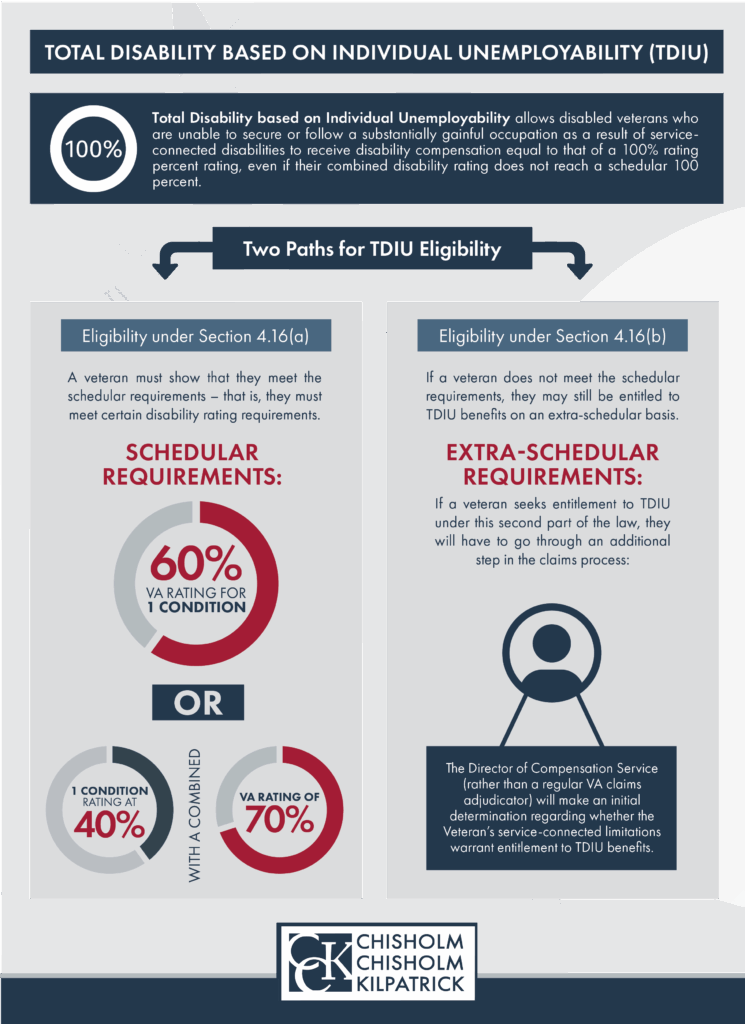
Veterans who are unable to secure or maintain substantially gainful employment due to their service-connected conditions may qualify for Total Disability based on Individual Unemployability (TDIU). This benefit allows veterans to receive compensation at the 100 percent disability rate, even if their combined rating does not reach a full 100 percent.
There are two main ways a veteran can become eligible for TDIU:
- Schedular TDIU – To qualify through this method, a veteran must meet one of the following criteria:
- Have a single service-connected disability rated at 60 percent or higher, or
- Hold a combined rating of 70 percent or more, with at least one of those conditions rated 40 percent or higher on its own.
- Extraschedular TDIU – If a veteran does not meet the schedular rating thresholds, they may still qualify under “extraschedular” TDIU. In such cases, VA’s Director of Compensation Services will review the claim and determine whether the veteran’s service-connected limitations prevent them from working.
Because TDIU claims often involve complex medical and vocational evidence, it is usually wise to get assistance from a VA-accredited representative, such as a licensed attorney or certified claims agent, to help strengthen your case. Reach out to CCK Law if you think a free case evaluation would be beneficial for your claim.
Need Help Appealing Your Bradycardia VA Disability Rating?
Has VA incorrectly denied or underrated your bradycardia claim? Are you looking to appeal your bradycardia disability rating? Then consider an accredited team of attorneys to help you navigate the process. The dedicated team at Chisholm Chisholm & Kilpatrick understands the complexities of VA appeals and is prepared to help you.
Reach out to CCK Law today at (800) 544-9144 or contact us online to discuss your case.