VA Disability Ratings for Gallbladder Conditions

CCK Law: Our Vital Role in Veterans Law
What Are Gallbladder Conditions?
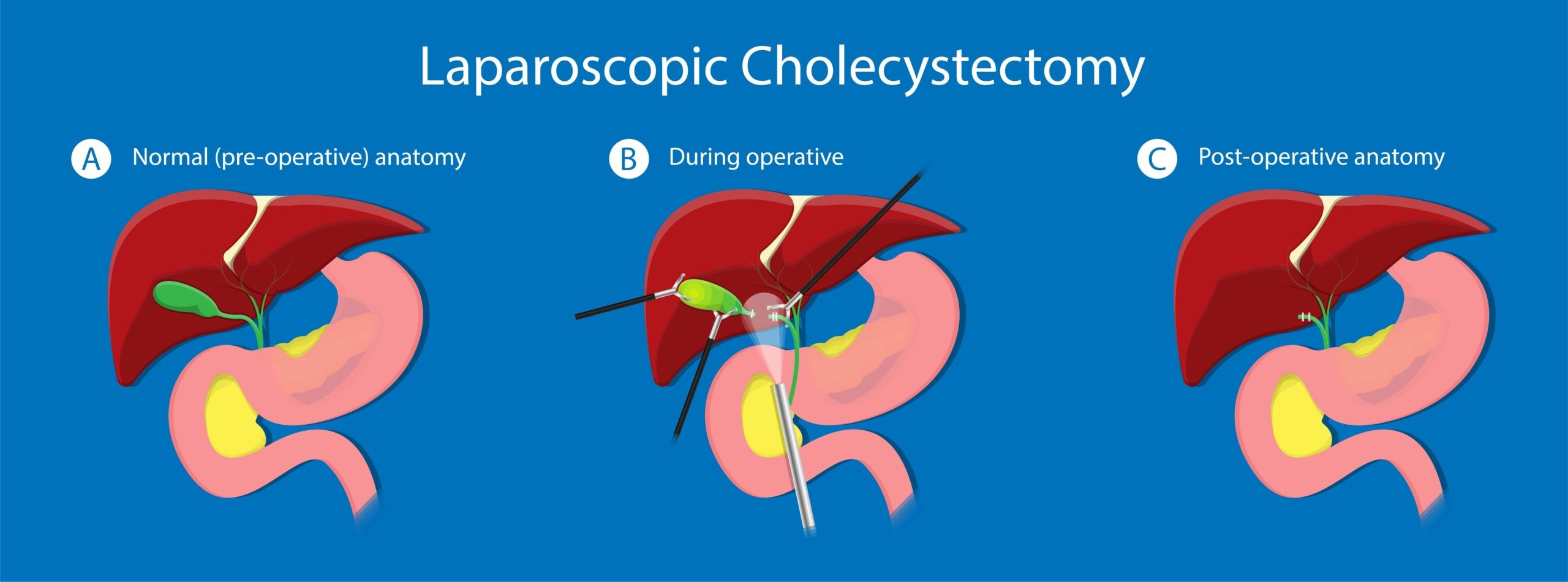
The gallbladder is located under the liver and is responsible for storing bile produced by the liver. The gallbladder releases bile to the small intestine to help digest fat. Gallbladder conditions occur when something, such as inflammation, infection, or blockage, interferes with normal gallbladder function.
Types of Gallbladder Conditions
- Gallbladder inflammation, or cholecystitis—This condition occurs when the gallbladder swells. Typically, this occurs when bile gets trapped in the gallbladder. When the buildup of bile creates a blockage in the gallbladder, infection can occur.
- Gallstones—Gallstones form when the bile that is stored in the gallbladder hardens into rock-like clumps. Gallstones can block the bile ducts, causing severe infection, specifically in the bile ducts, pancreas, or liver.
- Chronic Gallbladder Disease—Chronic gallbladder disease involves recurring gallstones and inflammation. The gallbladder can also become stiff or scarred with this condition.
- Gangrene—Gangrene is a serious infection that can sometimes be fatal. Infections like gangrene can kill gallbladder tissue.
- Primary Sclerosing Cholangitis—Primary sclerosing cholangitis is a chronic disease that affects the bile duct system that works to carry bile from the liver and gallbladder to the small intestine.
- Gallbladder tumors—Tumors can form in the gallbladder, bile duct, pancreas, or other surrounding organs. Tumors may be benign or malignant. If a tumor is malignant, it is cancerous. Even benign cancers can cause complications in the gallbladder, as they can create
Symptoms of Gallbladder Conditions
- Jaundice, or the yellowing of the skin
- Dark urine
- Lighter than usual stools
- Increased heart rate
- A sudden drop in blood pressure
- Fever
- Chills
- Vomiting
- Pain in the upper right area of the abdomen
Diagnosing Gallbladder Conditions
Some tests may be performed to help diagnose gallbladder conditions. Such tests can include:
- Blood tests
- Urine tests
- Ultrasound
- MRI
- CT Scan
- Cholescintigraphy
- X-ray
Treating Gallbladder Conditions
Some lifestyle changes may help treat gallbladder and lessen the pain of symptoms. For example, if a person is overweight, losing weight may help treat some gallbladder symptoms. However, rapid and drastic weight loss can be a trigger for some gallbladder conditions.
Generally, increased physical activity, limiting alcohol intake, and quitting smoking can decrease a person’s chance of developing a gallbladder condition. It is important to consult a doctor to be best informed on what lifestyle changes may be most appropriate to treat your gallbladder condition.
Medications can be used to treat gallbladder conditions, specifically to reduce inflammation of the gallbladder. Some surgeries may also be performed. In some instances, a doctor may recommend surgery to remove the gallbladder if the person experiences chronic inflammation.
VA Service Connection for Gallbladder Conditions
Veterans who experience gallbladder conditions may be entitled to service-connected compensation if their condition is related to their time in service. Importantly, there are several types of service connection that veterans can pursue.
Direct Service Connection
Generally speaking, direct service connection is the most common avenue to receiving VA disability benefits. Entitlement to direct service connection requires veterans to provide evidence of the following:
- A current, diagnosed gallbladder condition;
- An in-service event, injury, or illness; and
- A medical nexus linking their current condition to the in-service occurrence
One common in-service event associated with gallbladder conditions involves exposure to environmental toxins. Regardless of the specific cause, a medical nexus is extremely important as it ties the first two elements of service connection together.
Presumptive Service Connection
Presumptive service connection removes the need for a veteran to provide a nexus between their in-service event and their current disability. This means that veterans do not need to submit evidence proving that their condition was caused by service because the presumption provides the nexus.
Secondary Service Connection
To establish secondary service connection, veterans must show that an already service-connected condition caused a subsequent condition. If VA agrees that your already service-connected condition led to the development of a secondary condition, then that secondary condition may be subject to compensation.
For example, you are service-connected for anxiety and, as a result of that condition, you develop irritable bowel syndrome. Here, your irritable bowel syndrome should be service-connected on a secondary basis.
Service Connection by Aggravation
Service connection based on aggravation is another avenue to receiving VA disability benefits. This type of service connection occurs when a veteran enters service with an existing condition, but that condition worsens as a result of service.
For example, if you had a gallbladder condition prior to joining the military, but it is significantly worse following service, you may be entitled to service connection based on aggravation.

Compensation & Pension Exams for Gallbladder Conditions
Once a veteran files a claim for a gallbladder condition, VA may request a Compensation and Pension exam, or C&P exam. It is very important to make sure VA has the most up-to-date contact information to ensure that the veteran does not miss any calls or letters regarding their C&P exam. Veterans should be sure to attend the exam, as failure to do so can result in VA denying the veteran’s claim.
The exam will usually be performed by a VA physician or a VA contracted physician. Before the exam, the examiner will review the veteran’s c-file. This will contain any documentation that has been previously submitted to VA, as well as the veteran’s personnel medical and service records.
The veteran may also use a DBQ, or Disability Benefits Questionnaire, to bolster their claim. A Disability Benefits Questionnaire is a form created by VA that allows veterans to address important aspects of their condition, such as symptoms, severity, and possible causes, as well as the relationship between their condition and other disabilities. The veteran may also have their private doctor fill out a DBQ for them. This can be helpful, as the doctor who treats the veteran’s gallbladder condition can speak to the condition in greater detail.
VA Ratings for Gallbladder Conditions
VA rates gastrointestinal diseases under 38 CFR § 4.114, Schedule of Ratings for the Digestive System. Most conditions that affect the gallbladder will be considered gastrointestinal diseases. There are multiple diagnostic codes for the various gastrointestinal conditions that fall under this rating schedule.
VA will compare your symptomatology to that which is listed in the rating criteria in order to assign a disability rating. It is helpful to look up the diagnostic code that corresponds to your condition in order to determine what VA is looking for during the evaluation process.
Specifically, Diagnostic Code 7318 is used for the removal of the gallbladder. Veterans can receive a 0, 10, or 30 percent rating for the removal of a gallbladder.
- 30 percent —“With recurrent abdominal pain (post-prandial or nocturnal); and chronic diarrhea characterized by three or more watery bowel movements per day”
- 10 percent —”With intermittent abdominal pain; and diarrhea characterized by one to two watery bowel movements per day”
- 0 percent — Veterans who are asymptomatic after the removal of the gallbladder can receive this rating. While a 0 percent rating does not result in financial compensation, it is still important.
Notably, VA does not allow pyramiding – rating the same disability, or same manifestation (i.e., symptom) of a disability, twice. A veteran might experience the same or overlapping, symptoms as a result of two separate gastrointestinal diseases. This is not uncommon as many gastrointestinal diseases manifest in very similar ways.
However, VA will only compensate the veteran once for each symptom, regardless of how many times it is present across different conditions. Most often, VA will choose the diagnostic code that (1) is most applicable to the veteran’s gastrointestinal condition and (2) results in the highest disability rating.
Burn Pit Exposure and Gallbladder Conditions
What Are Burn Pits?
Open-air burn pits are large areas of land that were used as a means of waste disposal on American bases in Iraq, Afghanistan, and Djibouti after September 11, 2001. The practice was effective in reducing large quantities of waste, but the pits emitted plumes of toxic smoke. The following materials have been linked to military burn pits:
- Human waste
- Medical waste
- Ammunition
- Paint
- Plastic
- Rubber
- Styrofoam
- Other toxic chemicals
- Spoiled food
- Lubricants
- Petroleum
As these wastes were burned, harmful chemicals and toxic fumes were released into the atmosphere. As such, many veterans of Operation Enduring Freedom (OEF) and Operation Iraqi Freedom (OIF) have developed health conditions from hazardous exposures caused by the burn pits, including gallbladder conditions.
Does VA Have Presumptive Conditions for Burn Pit Exposure?
Yes, the passage of the 2022 PACT Act added 23 presumptions to VA’s list for toxic exposure, allowing “covered” veterans who were exposed to burn pits the chance to pursue presumptive service connection. These presumptive conditions for burn pit exposure are:
- Asthma diagnosed after service
- Head cancer (of any type)
- Neck cancer (of any type)
- Respiratory cancer (of any type)
- Gastrointestinal cancer (of any type)
- Reproductive cancer (of any type)
- Lymphoma cancer (of any type)
- Lymphomatic cancer (of any type)
- Kidney cancer
- Brain cancer
- Melanoma
- Pancreatic cancer
- Chronic bronchitis
- COPD
- Constrictive bronchiolitis or obliterative bronchiolitis
- Emphysema
- Granulomatous disease
- Interstitial lung disease
- Pleuritis
- Pulmonary fibrosis
- Sarcoidosis
- Chronic sinusitis
- Chronic rhinitis
- Glioblastoma
Notably, gallbladder cancer falls under these presumptions, since it counts as a form of gastrointestinal cancer. Gallstones may also count, so long as they appeared within one year of a veteran’s discharge from service.
It is also important to remember that this list is not exhaustive, and veterans may suffer from conditions not included in this list as a result of military burn pit exposure. If you developed a gallbladder condition due to burn pit exposure and it does not appear on the list above, you may still be eligible for VA disability benefits. You will just have to go the traditional route of using evidence to prove your condition is linked to your exposure.

VA Individual Unemployability (TDIU) and Gallbladder Conditions
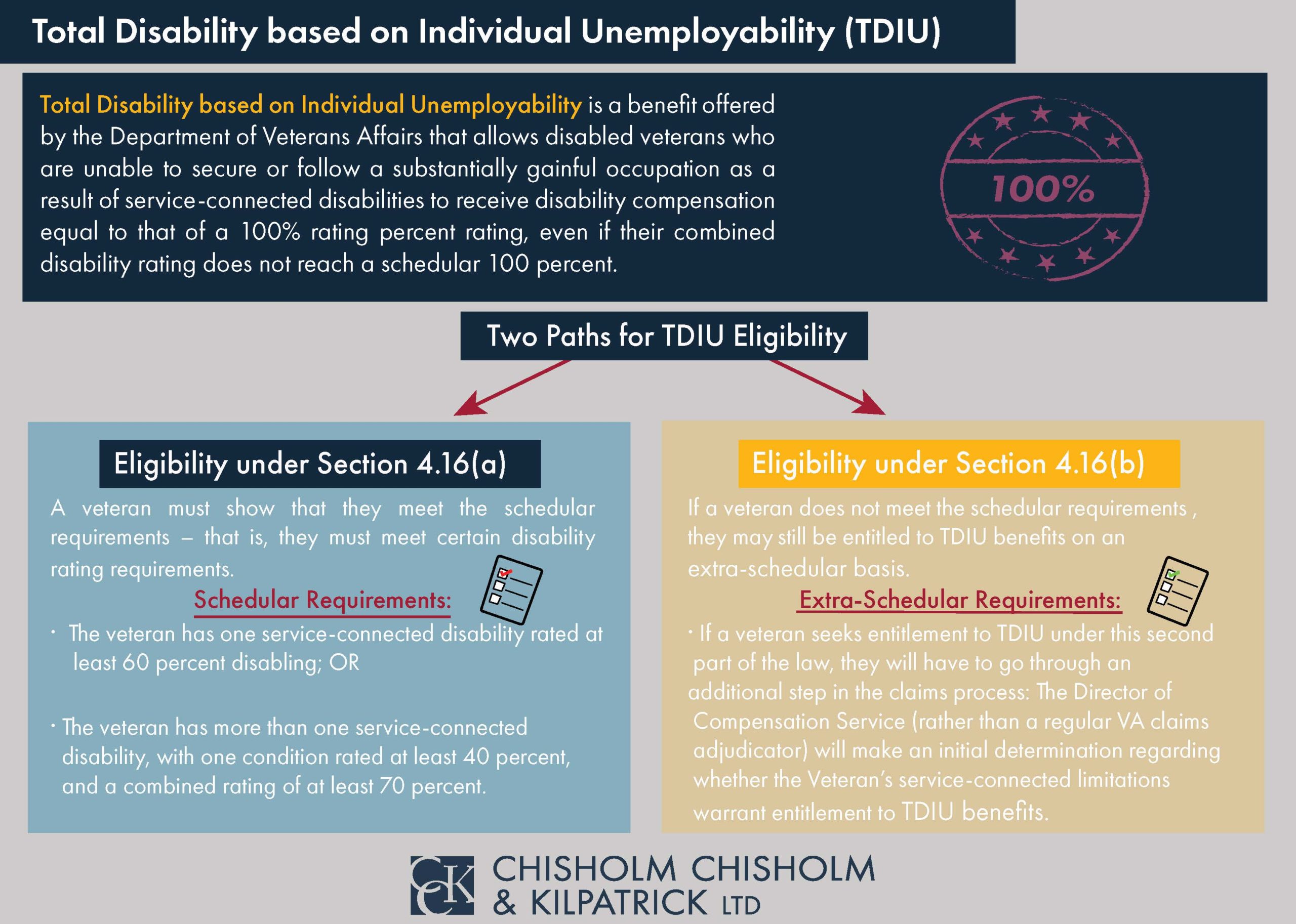
Veterans who are prevented from working because of their gallbladder condition, or symptoms of their gallbladder condition, may be able to receive a monthly VA disability benefit called total disability based on individual unemployability, or TDIU. This benefit compensates veterans at the 100 percent rating level, even if their disability rating may be less than that.
There are generally two pathways to become eligible for TDIU:
- 38 CFR § 4.16a (“Schedular”) – For this form of TDIU, the veteran must have:
- One condition rated at minimum 60 percent OR
- two conditions that can be combined to reach 70 percent, where one condition is at minimum 40 percent
- 38 CFR § 4.16b (“Extraschedular”) – This form of TDIU is for veterans who may not be able to achieve the ratings necessary for schedular TDIU but are still unable to obtain substantially gainful employment on account of their conditions.
- In this instance, the veteran must prove that their condition uniquely hinders their ability to obtain substantially gainful employment and therefore should not be rated on the standard disability rating criteria.
Veterans with multiple conditions may have a combined rating which would make them eligible for TDIU. As a result, veterans who receive a rating for their gallbladder condition may be able to receive compensation at the 100 percent rating level through TDIU.
Importantly, because the removal of the gallbladder can only be rated a maximum of 30 percent, veterans will need to be rated for another condition at a minimum of 40 percent in order to be eligible for TDIU under the schedular criteria.
Getting Help with Claims for Gallbladder Conditions
Veterans who were exposed to military burn pits and developed a gallbladder condition as a result of their service may be eligible for VA disability benefits. Though gallbladder conditions currently do not have a presumption of exposure, an accredited representative or lawyer may be able to assist veterans who are trying to become service-connected.
The VA disability lawyers at Chisholm Chisholm & Kilpatrick may be able to help with your appeal for a gallbladder condition. For a free case evaluation, call our office at 800-544-9144.