VA Disability Ratings for Pancreatitis

CCK Law: Our Vital Role in Veterans Law
Pancreatitis is a serious, potentially life-threatening condition that can cause intense pain and severe gastrointestinal symptoms. For many veterans, this disorder presents a chronic struggle that interferes with their quality of life and ability to support themselves financially.
If you are a veteran suffering from service-connected pancreatitis, you may qualify for a Department of Veterans Affairs (VA) disability rating for pancreatitis and the accompanying compensation and other benefits that a VA rating provides. This article will guide you through the claims process for a VA rating so you can earn the monthly payments to which you are entitled.
Key Features:
- Explanations of VA disability ratings, compensation, and benefits for pancreatitis
- Strategies to help you prove service connection for pancreatitis
- Tips on how to appeal your pancreatitis rating and potentially earn more accurate compensation
What Is Pancreatitis?
Pancreatitis is the medical term for inflammation of the pancreas, which is an organ in the abdomen responsible for secreting insulin, regulating blood sugar, and producing enzymes to help break down food matter in the digestive system.
Often, pancreatitis occurs when the enzymes produced by the pancreas are blocked from escaping into the digestive tract. With nowhere to go, they begin to digest the pancreas itself, leading to inflammation and pain.
There are two major types of pancreatitis:
- Acute pancreatitis — Acute or short-term pancreatitis is typically characterized by a rapid onset of symptoms. While serious and painful, with proper treatment, most veterans can recover from it within about a week. This type of pancreatitis is often caused by gallstones or excessive alcohol use.
- Chronic pancreatitis — Chronic or long-term pancreatitis consists of recurrent episodes of acute pancreatitis, with accompanying pain and symptoms. This form of pancreatitis may not allow for a full recovery, with some symptoms persisting after treatment due to damage to the pancreas. Common causes include chronic alcohol use or tobacco use.
Of these two forms of the disorder, chronic pancreatitis is the one most likely for veterans to seek disability compensation for. This is because the condition takes place over a longer period of time and is potentially disabling, oftentimes leading to more serious conditions like diabetes or pancreatic cancer.

Symptoms of Pancreatitis
Depending on which type of pancreatitis a veteran suffers from, their symptoms may differ substantially. However, the most general symptoms include:
- Severe abdominal pain, which can worsen after eating
- Pain in the back or shoulders
- Nausea and vomiting
- Jaundice, or yellowing of the eyes and skin
- Indigestion
- Fever
- Weight loss
- Tenderness of the abdomen
- Steatorrhea, or fatty, oily stools
Why Are Veterans Prone to Pancreatitis?
Over the course of their military service, it is possible for veterans to sustain injuries, exposures, or stressors that can contribute to pancreatitis later in life:
- Exposure to toxins or chemicals — Toxic chemicals like those found in Agent Orange can lead to the development of diabetes in veterans. This diabetes can later go on to cause pancreatitis.
- Abdominal injury — Per one study, certain injuries are a potential cause of acute pancreatitis. Therefore, any serious abdominal wound a veteran suffers during their service may cause complications that eventually lead to pancreatitis.
- Viral or bacterial infection — Veterans who were deployed overseas may be more likely to encounter serious viral or bacterial infections, either of which can lead to the development of pancreatitis.
- Drug or substance use — Alcohol and tobacco use rates are generally higher amongst veterans, both of which are leading contributors to pancreatitis. If substance abuse is caused by a service-connected disability (e.g., PTSD), then the resulting pancreatitis may be eligible for a VA rating too, under the legal theory of “secondary service connection.” Another example of secondary service connection is when certain medications used to treat other disorders lead to a veteran developing pancreatitis.
VA Disability Ratings for Pancreatitis Require Service Connection
One of the first steps to earning a VA disability rating for pancreatitis is to establish service connection. Essentially, service connection is when VA finds a medical link between a veteran’s condition and their military service. There are several different kinds of service connection veterans can pursue.
Direct Service Connection for Pancreatitis
To establish a direct service connection, a veteran needs to show that their diagnosed condition either began during their service or was worsened by it. Proving such a connection generally requires three main components:
- A verified medical diagnosis of pancreatitis;
- Documentation of an illness, injury, or incident that took place during service; and
- A medical nexus—meaning a professional opinion that links the current diagnosis to the in-service event.
VA typically depends on an expert medical opinion to determine whether a veteran’s pancreatitis is related to their military service. To evaluate this, VA often arranges a Compensation and Pension (C&P) exam, which helps them decide if the condition is connected to the veteran’s time in the service.
Secondary Service Connection for Pancreatitis
Veterans can establish secondary service connection by proving that their pancreatitis is the result of a separate condition for which VA has already recognized service connection.
“We have a good sense of many of the conditions that are primarily related to Agent Orange exposure, but that’s not often where things leave off, unfortunately,” says Nicholas Briggs, a VA-accredited claims agent and claims advocate at CCK Law since 2015. “After veterans have suffered from these primary conditions for many years, it’s common for them to start developing secondary disabilities as they attempt to treat that primary condition.”
For instance:
- Say a veteran is exposed to Agent Orange during their military service. Years after their discharge, they are diagnosed with Type 2 diabetes. Because diabetes is commonly linked to Agent Orange exposure, VA presumes there is a service connection and assigns the veteran a VA rating for diabetes.
- Over time, the veteran begins to experience bouts of severe abdominal pain that require treatment. Their doctor diagnoses them with chronic pancreatitis, offering a medical opinion that the veteran’s pancreatitis has been caused by their diabetes.
- Because the veteran’s pancreatitis has been caused by their already service-connected diabetes, the veteran can now file a claim for pancreatitis secondary to diabetes and potentially earn compensation from VA.

VA Presumptions for Pancreatitis
Some illnesses and medical conditions are automatically considered service connected under VA law, based on how frequently they occur in veterans who served in particular locations during certain time periods. To receive a VA disability rating for one of these presumptive conditions, veterans only need to show that they served in an eligible area during the designated timeframe.
Unfortunately, VA does not recognize any presumptive causes for pancreatitis. This means that any veteran seeking to earn a VA disability rating for pancreatitis must do so by proving either direct or secondary service connection.
What Evidence Does VA Look for in Pancreatitis Claims?
When filing for a VA disability claim for pancreatitis, the strength and relevance of a veteran’s evidence can play a crucial role. Veterans can improve their chances of approval by including the following types of documentation:
- In-Service Records — These can help show that a specific event or condition experienced during active duty is linked to a veteran’s current symptoms. Useful examples include personnel documents, in-service medical evaluations, discharge papers, and other military records.
- Medical Evidence — Submitting comprehensive medical records is essential to confirm both the diagnosis and ongoing treatment for pancreatitis. These documents can come from VA medical centers, private doctors, or written statements from healthcare providers describing the veteran’s condition.
In addition, personal statements from people familiar with the veteran’s situation—such as family members, close friends, or fellow service members—can provide insight into how pancreatitis impacts daily life. While not as authoritative as official documentation, these lay statements can still offer helpful context for VA decision-makers.
What to Expect at a Compensation & Pension (C&P) Exam for Pancreatitis
A Compensation and Pension (C&P) exam is a medical evaluation carried out by a VA provider or VA-authorized contractor. This assessment plays a key role in helping VA decide whether a veteran’s condition is linked to their military service. It also supplies important details VA uses to determine an appropriate disability rating once a service connection has been established.
Though a C&P exam for pancreatitis could take many forms, a veteran should generally prepare for the following:
- A physical exam where the VA provider assesses the veteran’s pain levels, movement limitations, or any tenderness they may be experiencing in their abdomen.
- A questionnaire section where the examiner will ask how the veteran’s symptoms impact their daily routines and quality of life. They might also inquire about any treatments the veteran has received for their chronic pancreatitis, and the results.
- Blood tests to measure enzyme levels in the body, as well as imaging or endoscopic tests to confirm inflammation in the pancreas. Diagnostic tests like these are required for a veteran to earn a VA disability rating for pancreatitis.
What Disability Ratings Does VA Offer for Pancreatitis?
VA updated the rating criteria for chronic pancreatitis under Diagnostic Code 7347 of 38 CFR § 4.114 – Ratings of the Digestive System. Using these new criteria, veterans with pancreatitis can receive disability ratings of 30, 60, or 100 percent.
Thus, VA rates pancreatitis as follows:
- 100 percent — Daily episodes of abdominal or mid-back pain that require three or more hospitalizations per year; and pain management by a physician; and maldigestion and malabsorption requiring dietary restriction and pancreatic enzyme supplementation
- 60 percent — Three or more episodes of abdominal or mid-back pain per year and at least one episode per year requiring hospitalization for management either of complications related to abdominal pain or complications of tube enteral feeding
- 30 percent — At least one episode per year of abdominal or mid-back pain that requires ongoing outpatient medical treatment for pain, digestive problems, or management of related complications, including but not limited to cyst, pseudocyst, intestinal obstruction, or ascites
Note that, if a veteran wants to earn one of the above VA disability ratings for pancreatitis, the proper diagnostic studies must be performed and confirm that their abdominal pain is indeed a result of pancreatitis.
Additionally, VA distinguishes between pancreatitis and pancreatic insufficiency. If a veteran has pancreatic insufficiency that results in endocrine dysfunction and diabetes, then they should instead be rated under Diagnostic Code 7913, which covers diabetes mellitus.

What if a Veteran Has a Pancreatitis Rating from Before the 2024 Changes?
Prior to May 2024, VA used slightly different criteria to rate the severity of a veteran’s pancreatitis. This included the possibility of a 10 percent rating, which has subsequently been eliminated.
- If you previously received a VA disability rating for pancreatitis based on the older evaluation criteria and are now pursuing a higher rating, it is important to understand that VA will not automatically reassess your claim under the new guidelines. Instead, to be considered for a higher percentage, you will need to file a formal request for an increased evaluation.
- However, if your pancreatitis-related claim was still pending as of May 19, 2024—the date the updated criteria took effect—VA will assess your case under both the old and new criteria, ultimately applying the version that offers the most favorable outcome.
VA Compensation for Pancreatitis
The higher a veteran’s VA disability rating for pancreatitis is, the more compensation VA will offer them each month. Consult the chart below to see the 2025 payment rates veterans could receive for their condition.
As of 2026, the VA disability rate benefit amounts are as follows:
- 0 percent disability rating: $0.00 per month
- 10 percent disability rating: $180.42 per month
- 20 percent disability rating: $356.66 per month
- 30 percent disability rating: $552.47 per month
- 40 percent disability rating: $795.84 per month
- 50 percent disability rating: $1,132.90 per month
- 60 percent disability rating: $1,435.02 per month
- 70 percent disability rating: $1,808.45 per month
- 80 percent disability rating: $2,102.15 per month
- 90 percent disability rating: $2,362.30 per month
- 100 percent disability rating: $3,938.58 per month
In addition to the above rates, veterans can also possibly receive higher benefits depending on the number of qualifying dependents they have. Read the following article to learn more about dependent benefits: “VA Benefits for Dependents of Disabled Veterans.”
Special Monthly Compensation (SMC) for Pancreatitis
Special Monthly Compensation (SMC) is an extra benefit offered by VA to support veterans dealing with more severe disabilities or unique medical circumstances. This additional financial compensation is intended to help cover needs that standard VA disability payments may not fully address.
Sometimes, pancreatitis can lead to long-term health issues or even the development of accompanying disorders like diabetes. In particularly serious cases of pancreatitis, or when multiple health issues combine to create a greater overall impact, VA may consider awarding enhanced compensation through SMC.
Can I Get Total Disability for Pancreatitis?
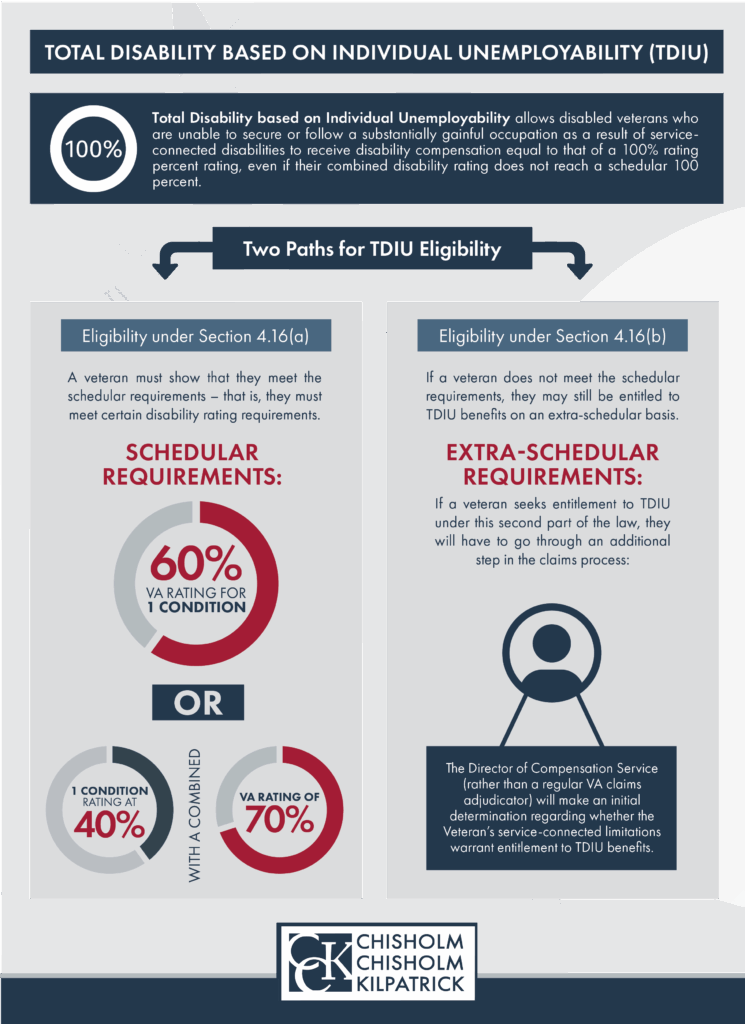
Yes, you can. The first way is via receiving a schedular 100 percent VA disability rating for pancreatitis. A second way is through Total Disability based on Individual Unemployability, or TDIU.
“Veterans who are prevented from working because of their service-connected disability or disabilities may be eligible for TDIU, [which] allows veterans to be compensated at VA’s 100 percent disability rate even if their combined schedular rating does not equal 100 percent,” says Maura Black, a partner and attorney at CCK Law since 2016:
There are two primary paths to qualifying for TDIU:
- Schedular TDIU – Veterans can meet the requirements for this option if they satisfy one of the following conditions:
- Have one service-connected disability rated at 60 percent or higher, or
- Possess a combined rating of 70 percent or more, with at least one disability rated individually at 40 percent or higher.
- Extraschedular TDIU – If a veteran does not meet the schedular rating benchmarks, they may still qualify under the “extraschedular” route. In these situations, VA’s Director of Compensation Services will assess whether the veteran’s service-connected impairments prevent them from securing gainful employment.
TDIU claims can be challenging, as they often require detailed medical records and employment history. For this reason, working with a VA-accredited representative—like a qualified attorney or certified claims agent—can be a valuable way to improve your chances of success. If you would like help reviewing your case, consider contacting CCK Law for a free case evaluation.
Looking to Appeal Your Pancreatitis Claim? Call CCK Law!
Appealing a pancreatitis claim can be difficult and discouraging, especially if you’ve spent years battling the VA claims and appeal processes. Fortunately, partnering with a VA-accredited attorney can make the process easier to manage and increase your chances of securing the VA disability rating for pancreatitis that you deserve.
Call CCK Law today at 401-237-6412 or contact us online for a free case evaluation.
VA-accredited attorneys do far more than fill out forms. Learn more about what a VA-accredited attorney can do.