Study Finds Burn Pit Soot and Dust Embedded in Veterans’ Lungs

A study published in Scientific Reports in December 2025 from National Jewish Health has found physical, tissue-based evidence of lung damage in post-9/11 veterans exposed to military burn pits.
By measuring carbon particles directly in lung tissue, researchers found that affected veterans had three times the carbon burden of healthy individuals, providing some of the strongest biological evidence yet that burn pit smoke causes lasting lung disease.
In this article, you will learn about the implications this study could have for veterans seeking burn pit-related disability compensation from the Department of Veterans Affairs (VA), and how they might use it to support their claims.
Key points:
- Researchers measured actual carbon particles in the lung tissue of 24 post-9/11 veterans — not just exposure histories or symptom questionnaires.
- Veterans with military burn pit exposure had carbon burdens three times higher than healthy control subjects, at a level similar to tobacco smokers with respiratory bronchiolitis.
- The elevated carbon levels were more closely linked to burn pit smoke rather than sandstorms or diesel exhaust.
- For veterans with non-presumptive respiratory conditions, this study may serve as new evidence supporting service connection for a VA disability claim.
Who We Are: Chisholm Chisholm & Kilpatrick (CCK Law) has argued many of the cases that have defined and clarified veterans disability law. CCK Law attorneys serve in leadership positions throughout the legal community and have posted more than 2,500 blogs and 1,100 videos about veterans benefits.
What Are Military Burn Pits?
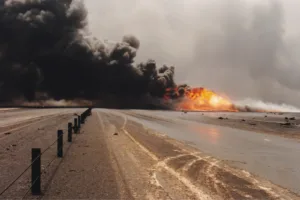
Military burn pits are large, open-air areas where the U.S. military and its contractors incinerated waste generated at military bases. They were widely used during post-9/11 operations in Iraq and Afghanistan, and in earlier conflicts in the Gulf War region.
These pits burned virtually everything — plastics, chemicals, medical waste, batteries, rubber tires, unexploded munitions, and other hazardous materials — releasing toxic smoke into the surrounding air.
Millions of veterans were stationed at or near these sites during their deployments. In the time since these operations, VA has gradually begun to recognize more and more conditions as related to military burn pit exposure.
Watch CCK Law Partners Jenna Zellmer and Emma Peterson discuss the essentials of burn pit exposure claims:
What Did This Burn Pit Exposure Study Find?
Researchers at National Jewish Health examined surgical lung biopsies from 24 post-9/11 veterans with deployment-related lung disease. They discovered that veterans with burn pit exposure had anthracotic (carbon-based) pigment levels three times higher than healthy control patients.
Non-smokers with deployment-related lung disease showed carbon burdens comparable to tobacco smokers with respiratory bronchiolitis.
Critically, these elevated carbon levels were more closely linked to burn pit smoke exposure, rather than other airborne hazards like sandstorms or diesel exhaust.
To conduct this study, researchers used a technique called Quantitative Microscopy for Particulate Matter (QM-PM) and measured two things directly in the lung tissue:
- Anthracotic pigment fraction—The proportion of carbon-based particles from combustion retained in lung tissue.
- Birefringent dust density—The density of silica and silicate particles, which indicate retained mineral dust.
These samples were then compared against lung tissue from the tobacco smokers with respiratory bronchiolitis and from the healthy, non-deployed individuals. The results revealed a much higher proportion of carbon-based particles in the lungs of veterans exposed to burn pits, which can potentially serve as physical evidence of their respiratory ailments.
This is significant because, while the health effects of burn pit smoke have long been documented anecdotally, establishing a measurable biological link between specific exposures and lasting lung disease has historically proven difficult. VA has sometimes denied claims based on that uncertainty.
What Does This Mean for Burn Pit-Exposed Veterans?
The PACT Act of 2022 established presumptive service connection for numerous respiratory conditions and cancers linked to burn pit exposure, making VA disability claims significantly easier for veterans with these illnesses. However, a number of respiratory conditions still remain outside this list of presumptive conditions.
For veterans with non-presumptive respiratory conditions they believe are related to their service, the National Jewish Health study may serve as objective medical evidence supporting their claim.
Non-presumptive conditions that may be supported by this research include:
- Deployment-related distal lung disease (DDLD)—A term used to describe lung and small airway-related conditions often found in post-9/11 veterans exposed to airborne toxins.
- Bronchiolitis—Inflammation of the small airways.
- Small airway disease
- Other biopsy-confirmed service-related lung abnormalities
Even for veterans whose conditions are already presumptive under the PACT Act, this study may help support claims where a VA examiner has previously concluded that a nexus with service “cannot be determined without speculation.”
Studies like this one can influence future policy. VA continually evaluates scientific research when deciding whether to expand the list of presumptive conditions for burn pit and other toxic exposures. Each study that establishes biological plausibility and quantifiable evidence adds to the body of science that could support further expansions of PACT Act presumptions for affected veterans.
How Can Veterans Use This Study?
While this study does not change VA law on its own, it can be a meaningful tool for veterans working with their physicians to build a VA disability claim.
Some possible ways a veteran could use this study to support their claim include:
- Sharing the study with their treating physician—Veterans should consider asking their doctor to review this study and assess whether it could be relevant to the veteran’s condition. A medical professional familiar with the study may be better equipped to write an effective medical opinion connecting a diagnosis to in-service burn pit exposure.
- Documenting their burn pit exposure thoroughly—The study participants had a median of three deployments totaling 29 months, on average. The more precisely veterans can document their deployment duration and proximity to burn pit sites, the stronger the foundation for a nexus opinion.
- Discussing the QM-PM technique with a doctor—The QM-PM technique used in the study is currently being evaluated at a limited number of specialized centers. Veterans who have already undergone a clinically necessary lung biopsy may wish to ask their pulmonologist whether quantitative microscopy techniques could provide additional information about particulate exposure.
- Citing the study in a claim or appeal—Veterans and their representatives can reference this study as supporting medical literature in VA disability claims or appeals for burn pit-related lung conditions. Scientific evidence linking a condition to in-service exposure is a recognized form of medical evidence in the VA system.
Veterans should also keep in mind, however, that this study examined lung tissue from only 24 participants, which is a relatively small sample size. While the study demonstrates biological plausibility, it does not necessarily constitute legal causation on its own.
Instead, a good portion of this study’s value for veterans is due to its importance as a step forward in quantifying what veterans and researchers have long suspected: Burn pit smoke leaves lasting damage in the lungs of those who were exposed.
Next Steps
We hope this blog helped answer your questions.
Need personalized assistance? If VA has made any kind of decision related to your claim, then CCK Law may be able to help. Contact us online or at 800-544-9144 for a free case evaluation.
(As of 2026, federal law prohibits agents and attorneys from charging veterans a fee to file an initial VA claim. In these cases, you will need to find a VA-accredited representative or VSO to assist you.)
Looking for more information? CCK Law hosts over 2,500 pages and 1,100 videos of free veterans law content. Search our blog or browse our YouTube channel for guides, explainers, and updates on VA benefits topics.
Stay current. Veterans disability law and VA policy change frequently. Follow CCK Law on social media using the links at the bottom of this page, or subscribe to one of our newsletters for updates tailored to your situation.
Frequently Asked Questions
What are burn pit presumptive conditions under the PACT Act?
The PACT Act of 2022 established presumptive service connection for many conditions linked to burn pit and toxic exposure, including cancers and respiratory illnesses such as asthma, chronic obstructive pulmonary disease (COPD), chronic bronchitis, and more.
For presumptive conditions, veterans with a qualifying diagnosis who served in a covered location do not need to prove a direct link between their condition and their service, since VA presumes the connection.
What if my respiratory condition is not on the PACT Act presumptive list?
Veterans whose lung conditions are not covered as presumptive can still pursue direct service connection.
The National Jewish Health study may be useful as supporting medical literature for disability claims involving non-presumptive conditions related to burn pit exposure.
What is a nexus letter, and do I need one for a burn pit claim?
A nexus letter is a written opinion from a medical professional stating that a veteran’s current condition was “at least as likely as not” caused or aggravated by their in-service exposure.
Veterans with non-presumptive conditions often need a nexus letter to establish service connection. Veterans with presumptive conditions under the PACT Act do not need one, though additional medical evidence can still be helpful in some cases.
How does the National Jewish Health study help VA disability claims?
The study provides objective, tissue-based evidence that burn pit smoke exposure leaves measurable biological changes in the lungs. For veterans with non-presumptive respiratory conditions, this study can be referenced in a claim or appeal as medical literature establishing biological plausibility.
It also may help physicians write stronger nexus letters by grounding their opinions in quantitative scientific findings.
What is the Open Burn Pit Registry, and should I sign up?
Update: As of August 1, 2024, veterans are automatically included in the Open Burn Pit Registry. To opt out or confirm further changes in the program, visit VA’s Airborne Hazards and Open Burn Pit Registry website.
The VA Airborne Hazards and Open Burn Pit Registry allows veterans and service members to voluntarily document their exposure to airborne hazards during deployment.
Participation is free and is not required to file a VA disability claim or receive VA health care. VA uses the registry data to track health conditions and inform ongoing research into the effects of toxic exposure.