How Can I Receive VA Disability Benefits After Burn Pit Exposure?
CCK Law: Our Vital Role in Veterans Law
In the past, for veterans to receive VA disability benefits for conditions they believed were caused by burn pit exposure, they typically had to prove that their disability was caused by their exposure. While this is still the case for some, the passage of the 2022 PACT Act changed how VA treats burn pit exposure claims.
With the presumptions added to VA by the PACT Act, it should now be easier for veterans who were exposed to burn pits to earn the disability ratings they deserve.
In this article, you will learn about what military burn pits are, what conditions they commonly cause, and how you can take advantage of the PACT Act to earn disability compensation from VA.
What is a Military Burn Pit?
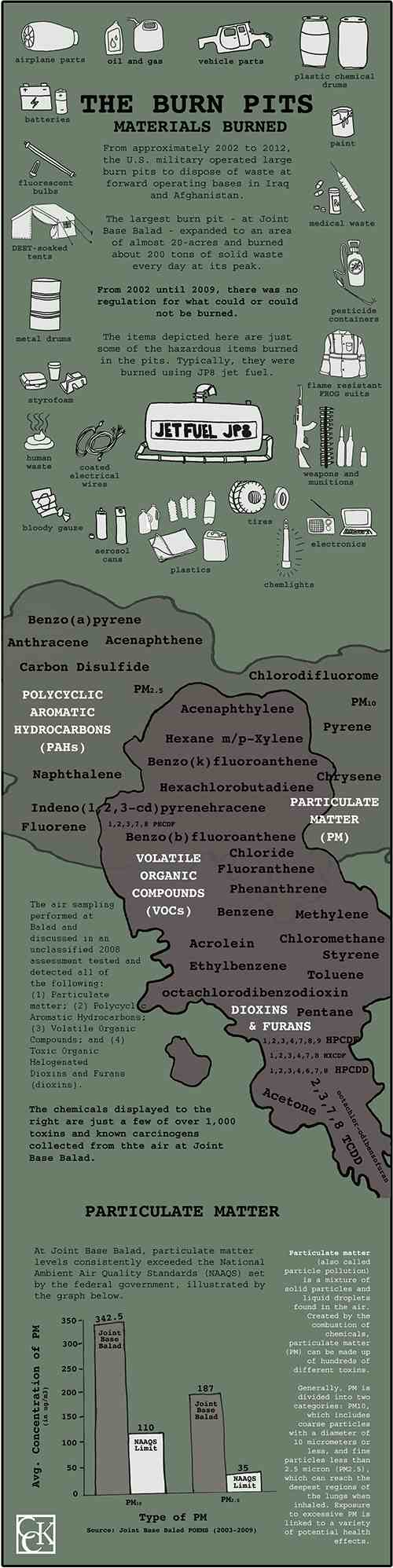
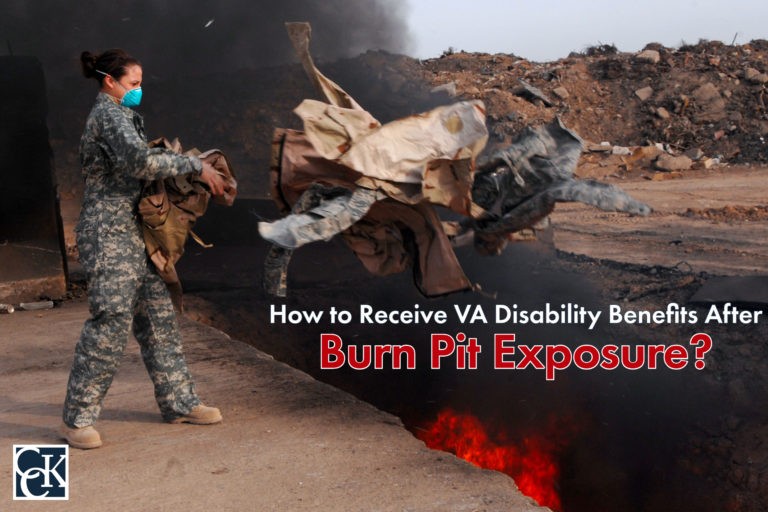
Military burn pits are large areas of land in which the military and its contractors incinerated all waste generated by military bases, including plastics, medical waste, rubber, and human waste.
The U.S. military used burn pits as part of their waste disposal protocol in places such as Iraq and Afghanistan in the post-9/11 era during Operations Iraqi and Enduring Freedom. While the practice was effective in reducing large quantities of waste, burn pits emitted plumes of toxic smoke. This was especially problematic in places such as the Middle East, as the desert wind carried the smoke for miles.
Many U.S. military veterans have suffered health consequences from burn pit exposure. Most of the negative effects involve temporary ailments of the respiratory system, though evidence suggests a link between burn pit exposure and the long-term deterioration of lung health.
When and Where Were Burn Pits Used?
You may have been exposed to burn pits while serving in any of the following military operations since September 11, 2001:
- Operation Iraqi Freedom
- Operation Enduring Freedom
- Operation New Dawn
Researchers continue to amass evidence demonstrating a link between burn pit exposure and a number of severe illnesses, including cancers and respiratory conditions.
Common Items Incinerated in Burn Pits:
- Human waste
- Medical waste
- Plastics
- Paint
- Rubber
- Wood
- Aluminum cans
- Rotten food
- Petroleum
- Lubricants
- Toxic chemicals
- Styrofoam
- Ammunition
- Unexploded ordnances
How Does Exposure to Burn Pits Lead to Illness?
For many years, the military used burn pits in Iraq, Afghanistan, and Djibouti to dispose of waste on military bases. The waste materials burned were set on fire in open-air pits and burned.
These open-air burn pits released toxins, carcinogens, smoke, and ash into the air, which then reached the skin, noses, and lungs of those in the vicinity. Following exposure, tens of thousands of veterans have reported lung diseases and other ailments as a result of their exposure.
Substances Released into the Air by Burn Pits
Joint Base Balad in Iraq was home to a massive burn pit that spanned over ten acres. Air samples the Department of Defense took from this base revealed particulate matter, polycyclic aromatic hydrocarbons, volatile organic compounds (VOCs), and toxic organic halogenated dioxins and furans in the air. These substances can cause a slew of serious health conditions.
- Particulate matter (PM), a complex blend of small particles and droplets of liquid, can pass through the throat and nose while a person is breathing to enter the lungs. These particles can cause serious health effects involving the heart and lungs.
- Polycyclic Aromatic Hydrocarbons (PAHs) are a group of more than 100 chemicals formed by incomplete burning of organic substances such as gas and coal. There were 17 different PAHs found in the air samples tested at Joint Base Balad.
- Volatile Organic Compounds (VOCs) are chemicals emitted from materials such as paints or disinfectants in the form of gasses. These gasses can be easily inhaled by a person in the vicinity of an open-air burn pit.
Are Burn Pits the New Agent Orange?
Toxic Organic Halogenated Dioxins and Furans are a group of toxic chemicals known to cause damage to the immune system, reproductive system, and many types of cancer. VA is well aware of the damage dioxins can cause because of the military’s use of Agent Orange during the Vietnam War. 2,3,7,8 TCDD, the most toxic dioxin, which also results from the production of Agent Orange, was present in the air at Joint Base Balad.
TCDD was found to be present in the air with both Agent Orange and burn pits; however, unlike with Agent Orange, TCDD was released along with dozens of other chemicals from burn pits. About two-thirds of the individual chemicals found in burn pits are known as Class A human carcinogens (i.e., cancer-causing substances). For example, researchers detected significant levels of benzene, which is known to produce various types of leukemia and other disabilities.
While VA initially did not recognize many disabilities associated with burn pit exposure, the passing of the 2022 PACT Act changed that. Now, VA acknowledges many conditions that could result from exposure to toxins and particulate matter from burn pits, extending presumptive service connection for these conditions to veterans who served either in the Gulf War or post-9/11. Presumptive service connection means that VA acknowledges the link between exposure and certain health conditions and therefore the burden to prove the connection between the condition and the exposure is not on the veteran.
Getting VA Disability for Burn Pit Exposure
To receive disability benefits for a medical condition caused by exposure to a military burn pit, you must file an application with VA. The application, along with supporting evidence, must show that you have a disabling condition and that a specific event in your military service—in this case, exposure to a burn pit—was the cause. This is called establishing service connection.
Alternatively, certain “covered” veterans may automatically qualify for service connection for their condition if they can prove that they served in certain times and regions that qualify for VA presumptions for burn pit exposure. These burn pit presumptions are a relatively recent development, having been created under the 2022 PACT Act.
VA Presumptions for Burn Pit Exposure
Under the PACT Act, it has now become much easier for “covered” veterans to earn VA disability compensation for conditions related to burn pit exposure. VA has added 23 conditions to their list of presumptions for burn pits. This means if a veteran has served either during the Persian Gulf War or during post-9/11 operations in the Middle East and went on to develop one of the following conditions, VA will automatically recognize that condition as being related to their military service, removing the need for the veteran to prove service connection. These conditions are:
- Asthma diagnosed after service
- Head cancer (of any type)
- Neck cancer (of any type)
- Respiratory cancer (of any type)
- Gastrointestinal cancer (of any type)
- Reproductive cancer (of any type)
- Lymphoma cancer (of any type)
- Lymphomatic cancer (of any type)
- Kidney cancer
- Brain cancer
- Melanoma
- Pancreatic cancer
- Chronic bronchitis
- COPD
- Constrictive bronchiolitis or obliterative bronchiolitis
- Emphysema
- Granulomatous disease
- Interstitial lung disease
- Pleuritis
- Pulmonary fibrosis
- Sarcoidosis
- Chronic sinusitis
- Chronic rhinitis
- Glioblastoma
For the purposes of the PACT Act, “covered” veterans are considered to be those who served in the following time periods and were thereby likely exposed to military burn pits:
- Veterans who, on or after August 2, 1990, performed active military, naval, air, or space service while assigned to a duty station in, including air space above:
- Bahrain
- Iraq
- Kuwait
- Oman
- Qatar
- Saudi Arabia
- Somalia
- United Arab Emirates
- Veterans who, on or after September 11, 2001, performed active military, naval, air, or space service, while assigned to a duty station, including the air space above:
- Afghanistan
- Djibouti
- Egypt
- Jordan
- Lebanon
- Syria
Earning Disability for Non-Presumptive Burn Pit Conditions
For veterans with burn pit-related conditions that are not on the list of presumptive conditions noted above, it should still be possible to establish service connection and earn compensation. These veterans will just have to gather the following key pieces of evidence to prove to VA that there is a connection between their burn pit exposure and their current illness:
- (1) a current diagnosis of a condition;
- (2) an in-service event, injury, or illness (such as exposure to a burn pit); and
- (3) a medical nexus linking the condition to the in-service occurrence.
In this case, a medical nexus opinion would be the testimony of a medical expert that a veteran’s burn pit exposure is “at least as likely as not” the cause of their current medical condition.
Burn Pit Claims vs. Gulf War Illness Claims
Veterans who served during the Gulf War were often exposed to different hazardous toxins, such as oil well fires, nerve gas, insecticides, pesticides, flea collars, and vaccinations. As a result, many Gulf War veterans went on to develop a cluster of debilitating symptoms collectively referred to “Gulf War Illness” or “Gulf War Syndrome”. It is not currently known exactly what causes Gulf War Illness, but it is likely due to the multiple toxins noted above.
While Gulf War Illness may sound similar to conditions caused by burn pit exposure, each actually have distinct symptomologies and are covered under different VA regulations. For instance, burn pit claims often fall under the 2022 PACT Act, while Gulf War Illness claims are specifically considered under VA’s Persian Gulf War regulations. These latter regulations recognize that certain conditions are due to environmental exposures present during the Gulf War, and cover service beginning August 1990 and extending through December 2026.
In other words, though it is possible for Gulf War veterans to have been exposed to both burn pits and Gulf War-specific toxins during their service, these exposures are distinct and usually do not cause the same illnesses or symptoms to develop.
What Is the Burn Pit Registry?
Recognizing the growing issue with burn pit exposure and subsequent medical conditions, VA established the Airborne Hazards and Open Burn Pit Registry. The Registry, which you can access on VA’s website, offers a starting point for building your VA disability claim. You can add your name to the registry and begin creating a record that you were exposed and later became ill.
That said, participation in the Burn Pit Registry and filing a VA disability compensation claim are two separate things, and one does not influence the other in any way. Adding your name to the Burn Pit Registry does not initiate a disability claim, nor does it hold your place in the claim queue (wait times for VA disability claims can be long). The Registry was established by Congress for VA to track service members who were exposed and use the data to identify trends and draw conclusions regarding burn pits’ impacts on service members’ health.
Eligible veterans may complete the burn pit registry questionnaire and an optional health evaluation at a VA medical facility. This health evaluation, or exam, is a free benefit to which veterans are entitled. The exam is not a Compensation & Pension (C&P) exam and is not required to receive VA benefits.
The purpose of the registry is to gather information about those exposed in an effort to better determine the effects such exposure may present. VA acknowledges that the veteran may save and submit notes from the health evaluation associated with the Registry to support their claim. The questionnaire may also be used to support the veteran’s claim.
What Will My VA Disability Benefit Amount Be?
Your monthly compensation depends on the disability rating assigned to your condition by VA. Possible ratings range from 0 to 100% in increments of 10.
As of 2026, the VA disability rate benefit amounts are as follows:
- 0 percent disability rating: $0.00 per month
- 10 percent disability rating: $180.42 per month
- 20 percent disability rating: $356.66 per month
- 30 percent disability rating: $552.47 per month
- 40 percent disability rating: $795.84 per month
- 50 percent disability rating: $1,132.90 per month
- 60 percent disability rating: $1,435.02 per month
- 70 percent disability rating: $1,808.45 per month
- 80 percent disability rating: $2,102.15 per month
- 90 percent disability rating: $2,362.30 per month
- 100 percent disability rating: $3,938.58 per month
Common Mistakes VA Makes When Adjudicating Burn Pit Claims
Burn pit exposure claims can sometimes be complicated and it is not unusual for VA to get them wrong. For instance, in the past, VA often confused burn pit exposure claims with other types of claims, specifically those related to Gulf War Illness. Mistakes like these can be incredibly damaging to claims and present various setbacks for the veteran attempting to secure VA disability benefits.
For reasons such as this, burn pit claims have historically been difficult for veterans to win. However, with the passage of the PACT Act and new burn pit presumptions, it should become easier for veterans suffering from burn pit-related conditions to earn the compensation they deserve from VA.
Call Chisholm Chisholm & Kilpatrick LTD for a Free Evaluation
Although burn pit exposure cases can be a difficult, uphill battle, veterans do not have to go through the process alone. The team at Chisholm Chisholm & Kilpatrick LTD has the experience and resources to help you fight for the VA disability benefits to which you are rightfully entitled. To speak with a member of our team and receive a free case evaluation to determine if we can help you, call 800-544-9144.