
Filing an Initial Claim for Long-Term Disability Benefits
To receive long-term disability benefits when you’re unable to work due to a medical condition or injury, you must file an initial claim with an insurance company. Preparing an initial claim involves gathering documentation and evidence of the disability preventing you from working.
A well-prepared claim increases the likelihood of a smooth approval process or a successful appeal, if necessary—insurance companies frequently deny even the strongest of initial claims. Therefore, understanding details like your policy’s definition of disability, specific evidence requirements, and all deadlines is highly advised when pursuing LTD benefits.
In this article, Chisholm Chisholm & Kilpatrick (CCK Law) will explain:
- The initial claim phase of the LTD process
- Documentation and evidence that claimants should gather when submitting a claim
- The claim review process
- And more
What Is the Initial Claim Stage of the LTD Process?
The initial claim stage of the LTD process is when a person suffering from a medical condition or injury files a claim with an insurance company to receive disability benefits.
However, those wishing to file for long-term disability benefits must thoroughly read their insurance policies.
These policies will include:
- Information on how an individual can obtain benefits for their disability
- Filing deadlines that claimants must adhere to
- Documentation claimants must submit
- And more

Some individuals may also have access to short-term disability benefits, which cover a person’s income for a shorter period than LTD benefits. For more information about the differences between these policies and when you may decide to file for one or the other (or both), read our article on the subject here.
How Does the Initial Claim Stage Begin?
The initial claim stage begins with the notice of claim, which is your official notification to the insurance company that you intend to file for LTD benefits. Key points to know:
- Deadlines matter: Your LTD policy lists deadlines for both the notice of claim and proof of claim. These vary by policy.
- Filing deadlines: Failing to meet these deadlines could result in your claim being denied.
- Don’t delay: Even if you hope to recover and return to work, be cautious about waiting too long. Make sure you understand your policy’s deadlines before deciding to hold off on filing.
What Documentation and Evidence Should You Gather for an LTD Claim?
All LTD claimants must submit evidence that shows they cannot work under their policy’s applicable definition of disability.

Some examples of evidence that individuals should gather for an LTD claim include:
- Detailed medical records showing the presence of their medical condition and symptoms
- Test results, such as X-rays, blood work, or MRIs
- Supplemental evidence, such as functional capacity tests, vocational evaluations, and witness statements
- Employment information
LTD Claims Forms: What Are They?
Once the insurance company receives the notice of claim, it will send the claimant claim forms that must be completed. These forms are typically composed of three primary sections:
- The Claimant Statement: A first-hand account by the person seeking benefits that details how their medical condition prevents them from working and impacts their daily activities.
- The Attending Physician Statement: A medical professional’s assessment of the claimant’s diagnosis, treatment, and functional limitations. This statement helps provide evidence to support the claim. Thus, it is vital to have open communication during every appointment so that your doctor knows the true extent of your condition.
- The Employer Statement: A report from the claimant’s employer, confirming their employment history, job duties, and any accommodations attempted before the disability claim.

Tips that claimants can use to ensure they properly complete these forms include:
- Be accurate and precise
- Attach additional sheets of paper if there is not enough space to properly explain the disability
- Make an appointment with the treating physician to have them fill out their respective form
What Does an Insurance Company Do When Reviewing an LTD Claim?
Once a claimant submits their claim forms and evidence, the insurance company will:
- Review submitted materials:
- Medical records
- Physician’s statement
- Employer’s statement
- Personal statement
- Any other submitted evidence
- Consult with medical professionals:
- Nurses or physicians may assess the severity of the condition
- These professionals are often hired by the insurer, so their findings may be biased (See Independent Medical Exams (IMEs))
- Render a decision:
- For ERISA-governed claims, insurers must decide within 45 days
“Typically, an insurance company must render a decision on your claim within 45 days after you submit it,” says Leah Small, Managing Attorney at CCK Law. “However, they are allowed to take up to two 30-day extensions. In order to do so…the extension must be due to circumstances outside the insurance company’s control, and they must notify the claimant, prior to the deadline, that they’re going to be taking an extension.”
What Happens When an LTD Claim Is Denied?
Insurance companies often deny LTD. However, this is not the end of the road. If you receive a denial of your long-term disability claim, you can file an appeal. It is important to remember to:
- Read the denial letter carefully
- Collect additional evidence and documentation
- Pay attention to deadlines — claimants typically have 180 days to file their appeals
Read our related article for more information on the administrative appeal stage.
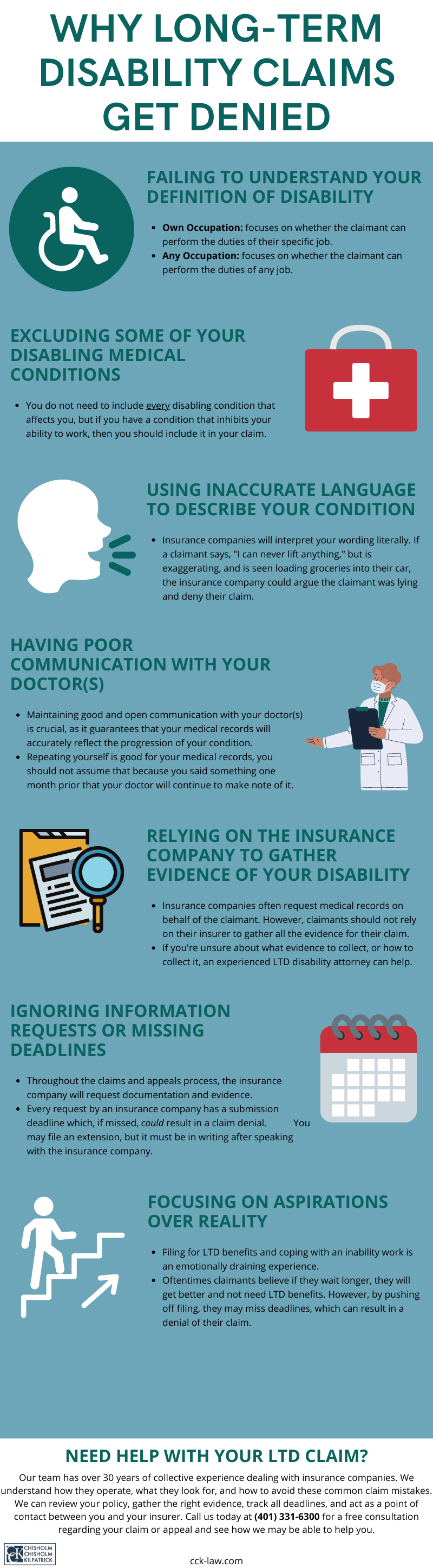
Share this Graphic

What Are Some Other Considerations for Long-Term Disability Claimants Filing an Initial Claim?
The long-term disability claims and appeals process has a lot of aspects that can be confusing. CCK Law has been helping claimants since 1999 obtain their disability benefits and has created a collection of resources to help you navigate this process:
- Are Long-Term Disability Benefits Taxable?
- What Happens to Long-Term Disability Benefits If I Lose My Job?
- Health Insurance While on Long-Term Disability
- Will Severance Affect Long-Term Disability Benefits?
- Can I Work While on Long-Term Disability?
- What Is a Social Security Offset?
- How Does SSDI Work with LTD?
- Long-Term Disability Offsets Explained
- Litigation
Frequently Asked Questions
What information do I need to include in my initial LTD claim?
An initial long-term disability claim generally requires several key documents: claim forms from your insurer, medical records, a statement from your treating physician, an employer statement about your job duties, and your own description of how your condition limits your ability to work. Providing thorough, accurate information at this stage can help prevent delays or denials.
How long does the initial claim review process usually take?
Insurance companies typically have 45 days to decide an initial claim, though they may request an extension of up to 30 days if additional information is needed. In practice, the timeline can vary based on the complexity of your case and how quickly supporting documents are submitted.
What are the most common mistakes people make when filing an initial claim?
Common mistakes include submitting incomplete forms, failing to include detailed medical evidence, underreporting symptoms or limitations, and missing deadlines. These errors can weaken your application and increase the chance of a denial.
Can I keep working while my initial claim is being reviewed?
Most LTD insurance policies require you to demonstrate that you are unable to perform the duties of your job due to your condition. Continuing to work during the claim review process may undermine your applications. It’s important to carefully review your policy terms and speak with your doctor before making decisions about employment during this stage.
Call Chisholm Chisholm & Kilpatrick Today
Filing for long-term disability benefits can be overwhelming, but you don’t have to go through it alone. For more than 25 years, CCK Law has guided claimants through every stage of the process. We can help if you are:
- Filing your initial claim and need guidance on forms, deadlines, and evidence.
- Appealing a denial and want to strengthen your case with additional evidence.
- Pursuing litigation after exhausting appeals with your insurance company.
Our team is ready to review your situation and determine how we can support you.
Call us today at (800) 544-9144 for a free case evaluation.