2027 VA Special Monthly Compensation (SMC) Rates


VA’s 2027 Special Monthly Compensation (SMC) rates will increase by 3.6 percent over the current rate, based on the 2027 cost-of-living adjustment (COLA). For a veteran with no dependents, SMC(k) rises to $144.90 per month, and the highest rates, SMC(r)(2) and SMC(t), rise to $11,677.45.
Key points:
- The new SMC rates are scheduled to take effect December 1, 2026, with the first payment at the new rates arriving December 31, 2026.
- SMC(k) is added to regular compensation at any rating, and a veteran can receive up to three SMC(k) awards.
- Most other SMC levels replace the regular 100 percent rate with a higher monthly VA compensation amount.
- Veterans paid at SMC(l) through SMC(s) rates receive more for an eligible spouse, child, or parent.
Who We Are: Chisholm Chisholm & Kilpatrick (CCK Law) has argued many of the cases that define and clarify veterans disability law. Our attorneys serve in many leadership positions and have posted more than 2,500 blogs and 1,100 videos explaining veterans benefits. With 100+ individuals accredited by VA or admitted to practice before the U.S. Court of Appeals for Veterans Claims, CCK Law has recovered over $1 billion in compensation for 36,000+ clients since 1999. (Past results do not guarantee future outcomes.) Contact us to tell us about your case.
What Is Special Monthly Compensation (SMC)?
Special Monthly Compensation (SMC) is additional or higher compensation that the Department of Veterans Affairs (VA) pays to veterans with severe disabilities. These include the loss or loss of use of limbs and organs, blindness, being housebound, and the need for professional help with daily activities. SMC is meant to account for circumstances the regular VA rating schedule does not fully contemplate.
Each SMC level covers a different kind of severe disability or care need. SMC(k) is paid on top of regular compensation. The other levels generally replace the regular rate with a higher one.
- SMC(k): Loss or loss of use of one body part or function, such as a hand, a foot, a creative organ, or sight in one eye. Paid in addition to your standard VA compensation.
- SMC(l) through SMC(o): More severe losses or combinations of them, such as loss of use of both feet or blindness in both eyes. SMC(l) also covers veterans who are bedridden or need help with daily activities from another person (Aid & Attendance).
- SMC(r): Veterans who already receive one of the highest SMC levels and need Aid & Attendance. SMC(r)(2) is for veterans who need daily medical care at home from a licensed professional, to avoid a nursing home, hospital, or other institutional setting.
- SMC(s): Veterans with a single disability rated at 100 percent, in addition to a combined rating of 60 percent for separate disabilities, or who are permanently housebound.
- SMC(t): Veterans with a traumatic brain injury (TBI) who need Aid & Attendance but do not qualify for SMC(r)(2). It pays the same rate as SMC(r)(2).
How Does the 2027 COLA Affect SMC Rates?
When the cost-of-living adjustment takes effect in December, SMC rates will increase by 3.6 percent. The Social Security Administration (SSA) calculates the COLA based on the change in the Consumer Price Index for Urban Wage Earners and Clerical Workers (CPI-W) during the third quarter of the year.
Congress then passes, and the President signs, a law directing VA to apply the same increase to VA disability compensation, including SMC. Read more in CCK’s 2027 VA disability pay rates and COLA blog.
Veterans receiving SMC will see an increase in their monthly VA payments starting December 31, 2026.
What Are the VA SMC Rates for 2027?
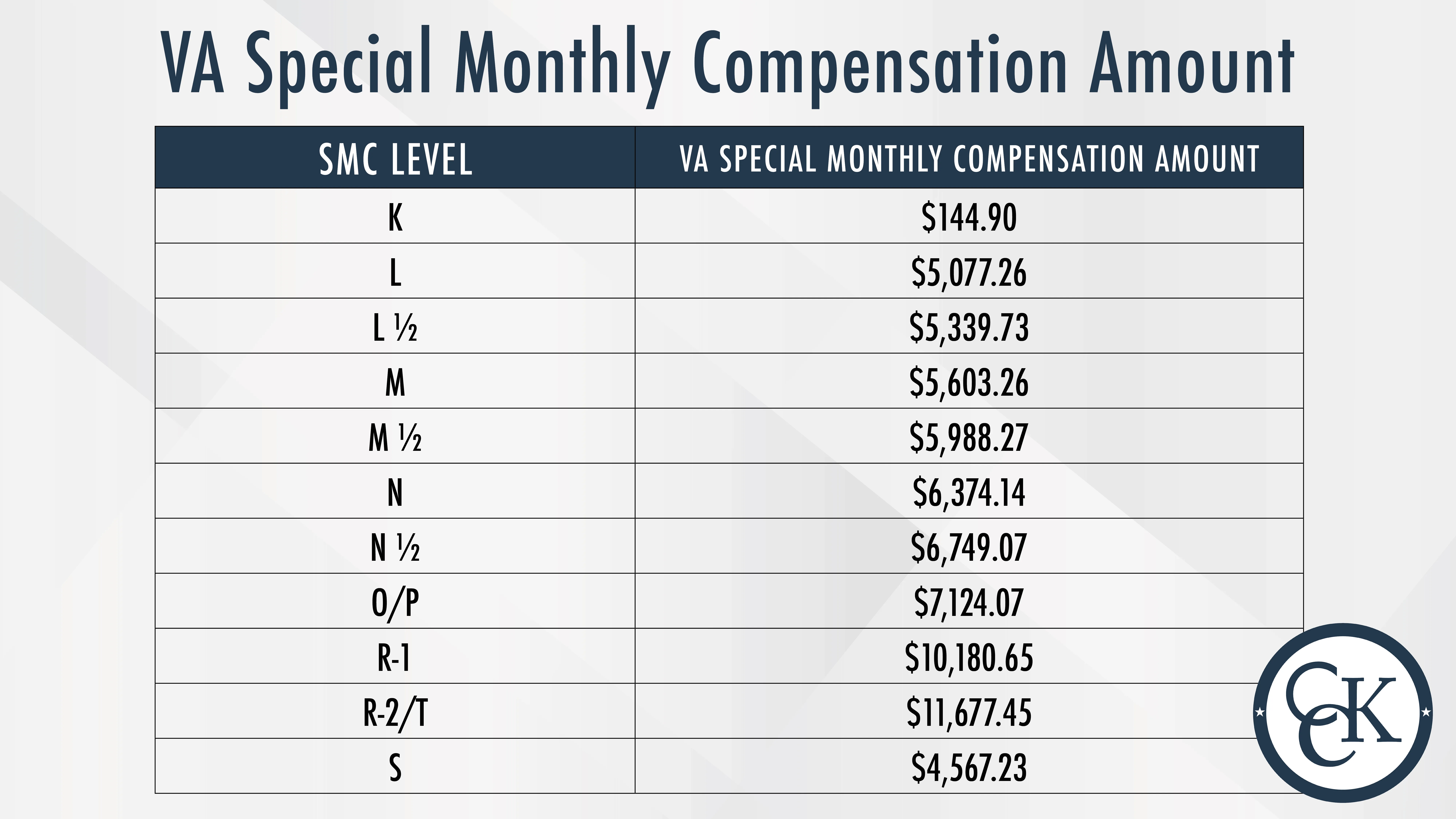
The table below shows 2027 Special Monthly Compensation rates for a single veteran with no dependents. You can find the current year’s figures in VA’s SMC rate table.
| SMC Level | 2027 Monthly Rate | 2026 Monthly Rate |
| SMC(k) | $144.90 | $139.87 |
| SMC(l) | $5,077.26 | $4,900.83 |
| SMC(l½) | $5,339.73 | $5,154.00 |
| SMC(m) | $5,603.26 | $5,408.55 |
| SMC(m½) | $5,988.27 | $5,780.00 |
| SMC(n) | $6,374.14 | $6,152.64 |
| SMC(n½) | $6,749.07 | $6,514.00 |
| SMC(o) and SMC(p) | $7,124.07 | $6,877.12 |
| SMC(r)(1) | $10,180.65 | $9,826.88 |
| SMC(r)(2) and SMC(t) | $11,677.45 | $11,271.67 |
| SMC(s) | $4,567.23 | $4,408.53 |
What Were the Previous SMC Rates?
The table below shows recent rates for SMC(k) and for SMC(r)(2) and SMC(t), the highest SMC rate, for a veteran with no dependents:
| Year | COLA | SMC(k) | SMC(r)(2) and SMC(t) |
| 2023 | 8.7 percent | $128.62 | $10,365.53 |
| 2024 | 3.2 percent | $132.74 | $10,697.23 |
| 2025 | 2.5 percent | $136.06 | $10,964.66 |
| 2026 | 2.8 percent | $139.87 | $11,271.67 |
| 2027 | 3.6 percent | $144.90 | $11,677.45 |
Can Veterans Receive More SMC for Dependents?
Yes. Veterans paid at any SMC rate from SMC(l) through SMC(t) can receive a higher monthly amount for eligible dependents, which include:
- A spouse, with an added amount if the spouse needs Aid & Attendance
- Dependent parents
- Children under age 18
- Children ages 18 to 23 who are in school
- A child who became permanently incapable of self-support before age 18
For 2026, for example, VA adds $201.41 per month for a spouse who receives Aid & Attendance at every SMC level from SMC(l) through SMC(t). For a full breakdown of VA disability rates, see CCK’s 2027 disability pay rates blog.
SMC(k) works differently. It is a flat amount with no dependent rate. Veterans who receive SMC(k) can receive more compensation for dependents through their standard VA disability rating if it is rated at 30 percent or higher.
How Do Veterans Apply for Special Monthly Compensation?
Veterans do not need a separate SMC application. VA should consider entitlement to SMC when the evidence in a claim shows a qualifying disability, such as during a claim for increased compensation. Unfortunately, this is not always the case, which is why having an accredited representative’s assistance can be helpful in these claims or appeals.
To specifically request SMC based on Aid & Attendance or housebound status, veterans can submit VA Form 21-2680, Examination for Housebound Status or Permanent Need for Regular Aid and Attendance, completed by a medical provider.
If VA issued a decision that should have awarded SMC but did not, the veteran can challenge it through a Higher-Level Review, by submitting new and relevant evidence through a Supplemental Claim, or through an appeal to the Board of Veterans’ Appeals.
Did VA Deny Your Claim for SMC?
If you disagree with a VA decision, consider contacting Chisholm Chisholm & Kilpatrick. An experienced, VA-accredited law firm may offer significant tools and resources in support of your appeal.
While past results do not guarantee future outcomes, CCK Law has had favorable outcomes in 98.5% of its actions before VA and a 95% win rate before the U.S. Court of Appeals for Veterans Claims (federal court). We have recovered over $1 billion in compensation for 36,000+ clients to date.
Contact us online or at 800-544-9144 to tell us about your case.
Frequently Asked Questions
Is Special Monthly Compensation taxable?
No. Under 38 USC § 5301, VA benefit payments, including Special Monthly Compensation, are exempt from taxation. Veterans do not pay income tax on SMC.
Is Special Monthly Compensation the same as Special Monthly Pension?
No. Special Monthly Compensation is paid to veterans with service-connected disabilities. Special Monthly Pension is a separate, needs-based benefit for veterans or survivors receiving VA pension who need Aid & Attendance or are housebound.
Can a veteran receive more than one SMC(k) award at the same time?
Yes. A veteran may receive one to three SMC(k) awards if they have separate qualifying losses, such as the loss of use of one hand and the loss of use of a creative organ. Each SMC(k) award is added to the veteran’s regular compensation.
How is Special Monthly Compensation different from TDIU?
Total disability based on individual unemployability (TDIU) pays a veteran at the 100 percent rate when service-connected disabilities prevent substantially gainful employment. SMC is paid for specific losses or care needs, and some SMC levels pay more than the 100 percent rate.
A veteran may qualify for both. For example, TDIU based on a single disability, combined with other disabilities independently rated at 60 percent or more, may support SMC(s), as the Court of Appeals for Veterans Claims held in Bradley v. Peake. [22 Vet. App. 280 (2008)]
Share this Graphic