VA Ratings for Somatic Symptom Disorder


What Is Somatic Symptom Disorder?
Somatic symptom disorder is characterized by an extreme focus on physical- and health-related symptoms (e.g., pain or fatigue). This focus produces significant emotional distress and difficulty functioning. Signs and symptoms of this condition may include:
- Constant worry about potential illness
- Viewing normal physical sensations as a sign of severe physical illness
- Fearing that symptoms are serious, even when there is no evidence
- Thinking that physical sensations are threatening or harmful
- Feeling that medical evaluation and treatment have not been adequate
- Fearing that physical activity may cause damage to your body
- Repeatedly checking your body for abnormalities
- Frequent health care visits that worsen or do not relieve your concerns
- Being unresponsive to medical treatment or unusually sensitive to medication side effects
- Having a more severe impairment than is usually expected from a medical condition
DSM-5 Diagnosis
According to the DSM-5, excessive thoughts, feelings, or behaviors related to the somatic symptoms or associated health concerns must manifest as at least one of these:
- Disproportionate and persistent thoughts about the seriousness of one’s symptoms
- Persistently high level of anxiety about health or symptoms
- Excessive time and energy devoted to these symptoms or health concerns
Somatic symptom disorder is typically specified based on the category that best describes the presentation of the condition (below):
- With predominant pain: This specifier is for people whose somatic symptoms predominantly involve pain
- Persistent: A persistent case is characterized by severe symptoms, marked impairment, and long duration (i.e., over six months)
Somatic symptom disorder is also characterized by its level of severity:
- Mild: Only one of the symptoms specified above (“DSM-5 Diagnosis” section) is fulfilled
- Moderate: Two or more of the symptoms specified above are fulfilled
- Severe: Two or more of the symptoms specified above are fulfilled, plus there are multiple somatic complaints (or one very severe somatic symptom)
To officially determine a diagnosis of somatic symptom disorder, you will likely need to attend an appointment with a mental health provider. The provider should conduct a psychological evaluation to discuss symptomatology, fears or concerns, stressful situations, and interpersonal difficulties.
Treatment
The primary goal of treatment is to improve symptomatology and the ability to function in daily life. Many people with this condition participate in individual psychotherapy (i.e.” talk therapy”). Research shows that cognitive behavioral therapy (i.e., a type of psychotherapy) is beneficial in treating people with somatic symptom disorder.
Cognitive behavioral therapy for this condition involves examining and adapting beliefs and expectations about health/physical symptoms, learning how to reduce stress and cope with physical symptoms, and reducing preoccupation with physical symptoms. Some psychotropic medications may also be helpful.
How To Get Service Connection for Somatic Symptom Disorder
To establish direct service connection for somatic symptom disorder, veterans must demonstrate:
- A current diagnosis of somatic symptom disorder;
- An in-service event, injury, or illness; and
- A medical nexus linking the current diagnosis to the in-service occurrence.
VA will often look for in-service treatment records for the condition. If psychiatric symptoms emerged during service and the veteran sought treatment with a mental health counselor, it should be documented in service records. In other cases, veterans may provide lay statements from themselves or family/friends outlining the onset and progression of their condition.
Medical records, treatment notes, and lay statements are all important forms of supporting evidence; however, the most important evidence is the medical nexus. The medical nexus opinion is typically provided during a Compensation & Pension exam.
A positive medical nexus will state that the veteran’s somatic symptom disorder was “at least as likely as not” caused or aggravated by the veteran’s service.
How VA Rates Somatic Symptom Disorder
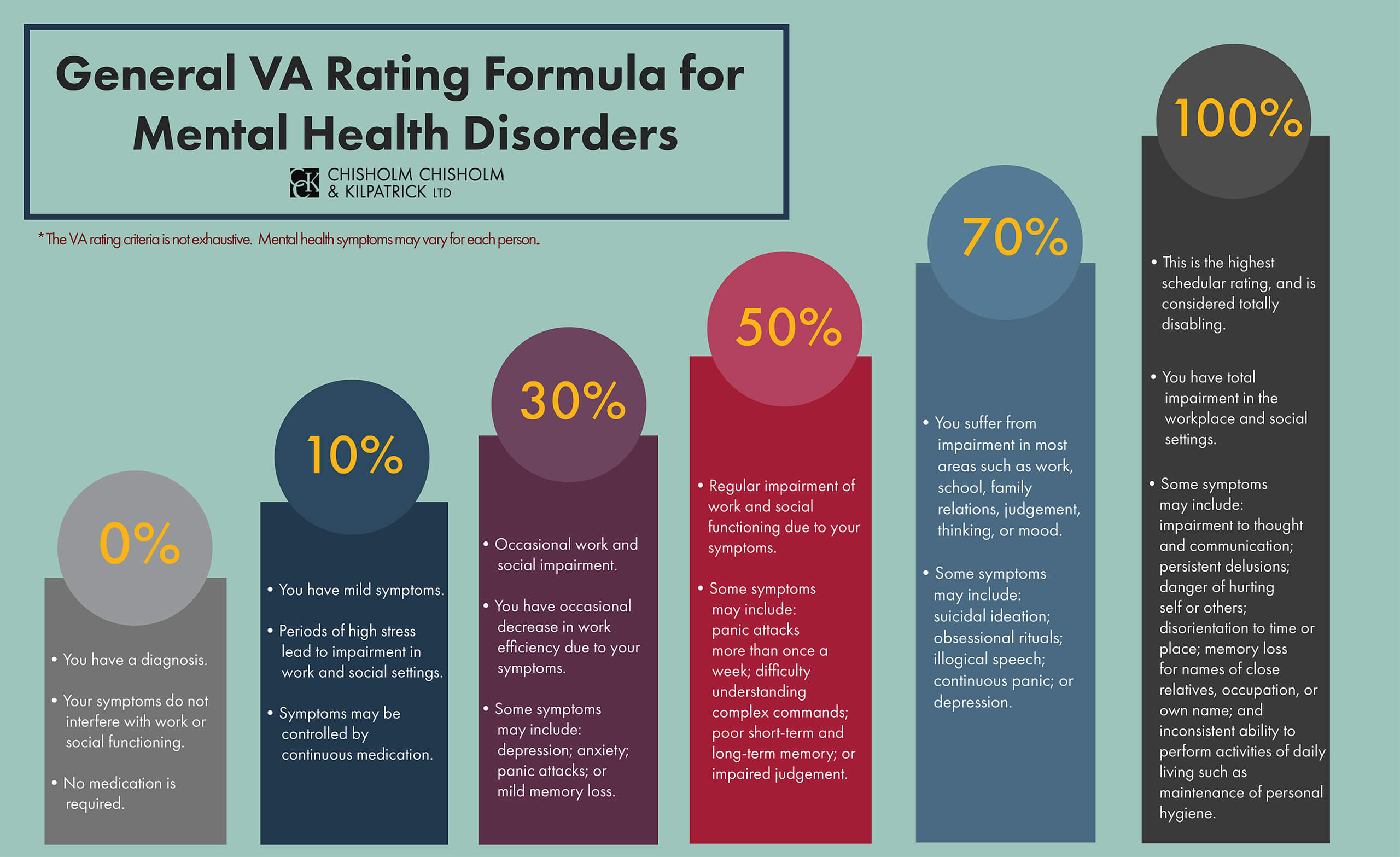
Aside from eating disorders, VA rates all eligible mental health conditions (including somatic symptom disorder) using the same diagnostic criteria. Mental health conditions are rated at percentages of 0, 10, 30, 50, 70, or 100 using VA’s General Rating Formula for Mental Disorders. These ratings are based on the level of social and occupational impairment the mental health condition presents.
For example, a veteran with mild symptoms, or whose symptoms are well controlled by continuous medication, may receive a disability rating of 10 percent. Veterans with severe symptoms — such as an intermittent inability to perform activities of daily living or suicidal ideation — may receive a 100 percent rating.
Veterans are not required to meet all, or even any, of the criteria in a rating level to qualify for that rating. Since mental health conditions can manifest differently per person, VA’s rating formula for mental health conditions is not binding.
Symptoms listed in each level of the rating formula are simply examples to demonstrate the types and levels of impairment common at that assigned percentage rating.
TDIU for Somatic Symptom Disorder
If a veteran cannot work due to their somatic symptom disorder, they should consider applying for TDIU.
This benefit allows veterans to receive monthly compensation at the 100 percent rate even if their service-connected conditions do not add up to a 100 percent rating when combined.
Veterans will likely need to provide evidence such as lay statements, employment records, and annual income records to support their claim for TDIU based on somatic symptom disorder.
Share this Graphic