VA C-File: What is it, and How Do I Get It?

What is a VA C-File?
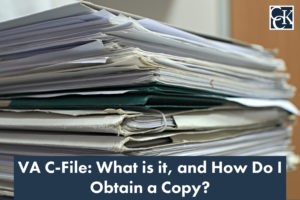
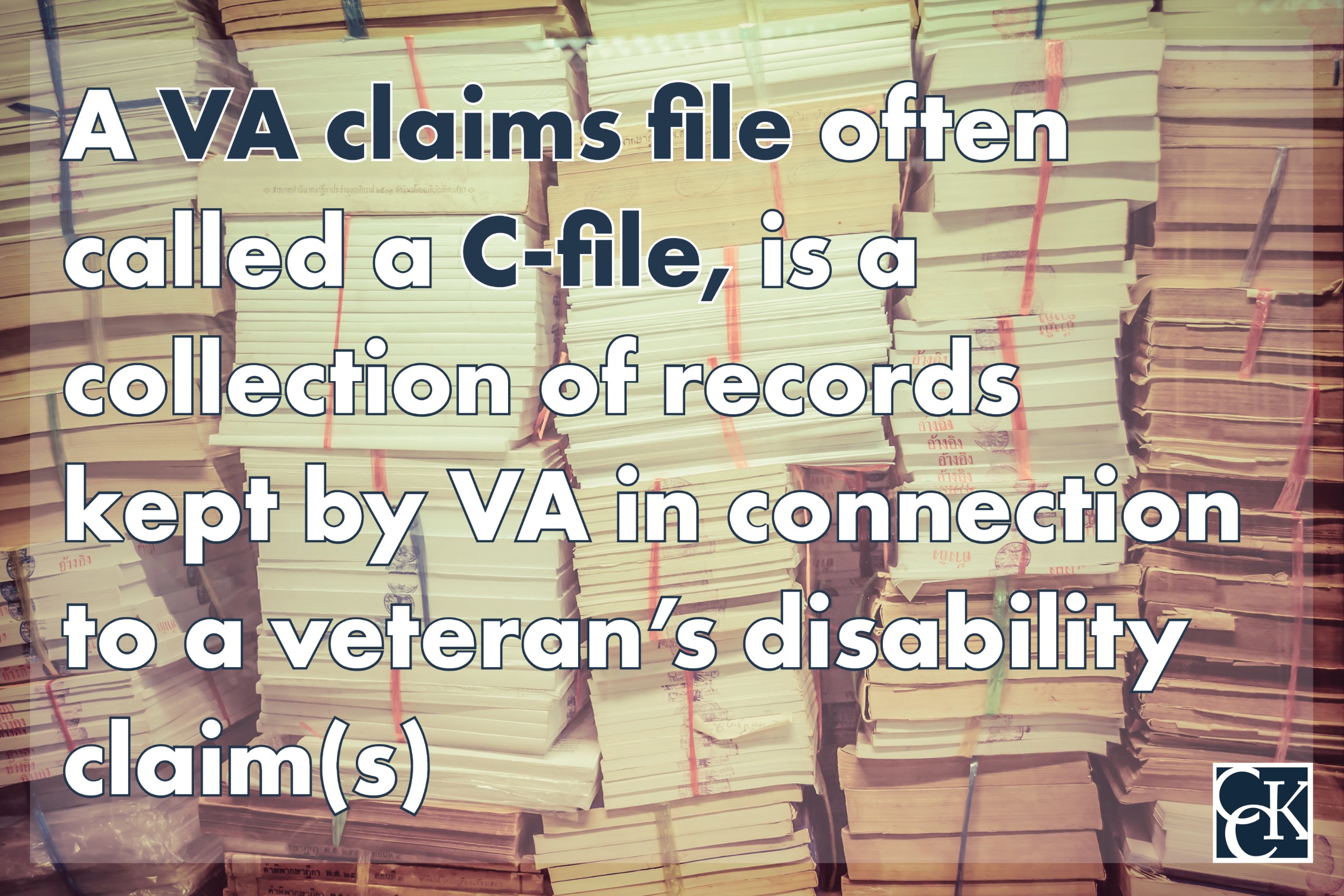
A VA claims file often called a C-file, is a collection of records kept by VA in connection to a veteran’s disability claim(s). When a veteran first files a claim for benefits, VA will request the veteran’s service records and any medical records relevant to the claim.
As your claim progresses, your claims file will grow. Any additional claims you file will be added to your existing C-File as well.
What Does a VA C-File Look Like?
Until the 1990s, VA C-Files were entirely paper-based. All of a veteran’s service records, medical records, claims, and appeals were gathered together and used to create a hard copy claims file.
These C-Files were not organized in chronological order or any specific format. Therefore, veterans and their representatives were required to go through each document to annotate and make sure it was relevant to the veteran’s claim, which proved to be a very time-consuming process.
VA recognized that paper C-Files were a major problem and, as a result, began to digitize everything. Now, when veterans or their representatives request a copy of a claims file, it comes on a compact disc (CD) in its entirety.
How Big are Claims Files?
As discussed above, claims files can be anywhere from dozens to thousands of pages long, and the length varies from veteran to veteran. Generally, the longer a case has been pending, the larger the file will be due to the amount of evidence and appeals involved. When a claim is filed, the claims file is typically small due to the lack of evidence and materials that have been gathered at that point.
What Documents Are Included in a Veteran’s C-File?
Generally speaking, a C-File includes information veterans send to VA, records VA obtains on their behalf, and documents created by VA. Some of the most basic documents found in a veteran’s C-File include the following:
DD-214, Report of Separation from Service
A veteran’s DD-214 form contains information about their character of service, which can determine eligibility for disability benefits. It also includes a veteran’s dates and locations of service, specialties, any medals received, and other pertinent information about their term(s) of service.
Application for Benefits
Any applications or claims for benefits that veterans have previously submitted should be included in the C-File. In addition to original claims, subsequent appeals should be present as well.
Disability Benefits Questionnaires (DBQs)
A Disability Benefits Questionnaire (DBQ) is a form created by VA that allows the veteran to address important aspects of their condition, such as symptoms, severity, and possible causes, as well as the relationship between their condition and other disabilities. The DBQs associated with your claim should all appear in the C-File.
Buddy Statements and Lay Testimony
A Statement in Support of Claim, also commonly known as lay evidence, a witness statement, or buddy statement, is a VA form that veterans, their families, friends, former service members, and others, can use to provide information to substantiate a claim for VA benefits.
VA Denial Letters
As documents related to previous claims are included in the C-File, denial letters will also be included.
Rating Decisions
Rating decisions generally explain why benefits were granted, denied, or remanded, and why certain evaluations were assigned. All Rating Decisions issued should be in the C-File.
Code Sheets
Code sheets indicate a veteran’s disability ratings along with the effective dates of any benefits and the corresponding amount of monthly compensation.
Medical Records
There are several types of medical records that can be found within a VA C-File. Copies of service medical records, if VA requested them while
gathering information to decide your claim, should be in the C-File. Records from VA Medical Centers or private treatment centers where the veteran receives medical care will usually also be included. Compensation and Pension (C&P) Exam reports are usually written by the examiner who performs the C&P Exam and will typically be submitted to the C-File following the exam.
Appeals
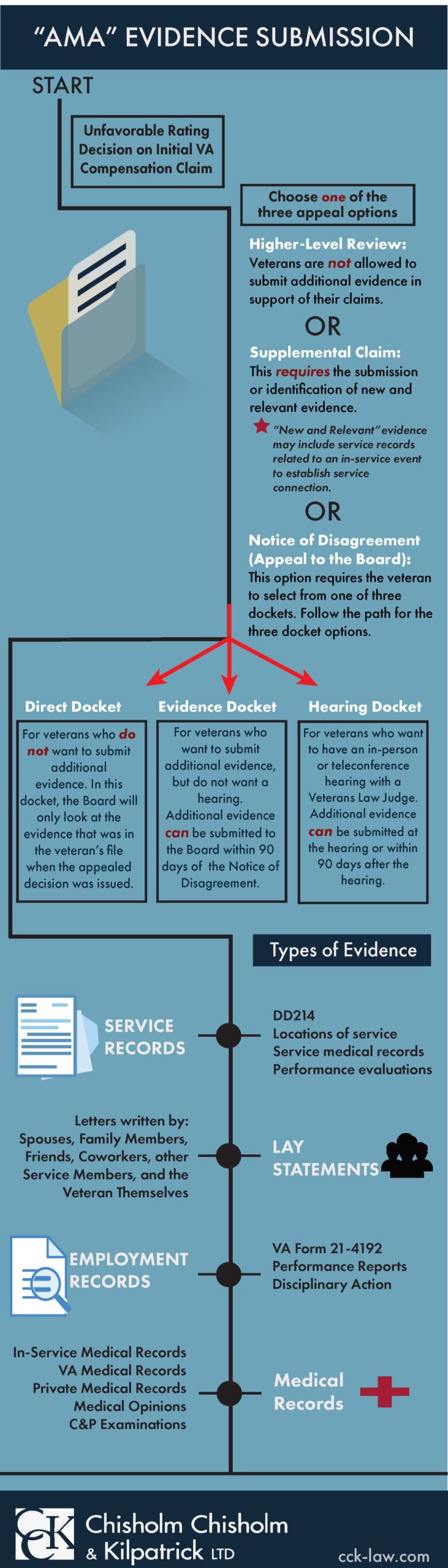
If you have already filed a claim and that claim was denied, the following documents may be in your C-File depending on the review option you selected:
- VA Form 20-0995, Veteran’s Supplemental Claim Application
- VA Form 20-0996, Application for Higher-Level Review
- VA Form 10182, Notice of Disagreement
Why Might Veterans Want to Obtain Their C-File?
Essentially, your C-file contains all the information necessary for VA to decide your claim. VA is required to gather this information to assist your VA claim under its duty to assist.
Therefore, it can be beneficial for veterans to obtain and look through their C-Files to ensure all information is correct and accounted for, and that VA’s decision is accurate.
Viewing what has already been considered can help form a better strategy for appealing (e.g., what evidence VA may still need).
How to Get Your VA C-File
Veterans can obtain their C-Files by submitting either a Privacy Act (PA) Request, or a Freedom of Information Act (FOIA) Request. The most common way to do this is by completing VA Form 20-10206 (FOIA/PA Request) and submitting it to VA’s Evidence Intake Center.
VA no longer relies on local Regional Offices to handle C-File requests, and most claims files are now maintained electronically. As a result, requesting records in person is generally not a reliable option for retrieving these files.
After submitting a request, it can take several months or longer for VA to process and provide the C-File, depending on backlog and file size.
Veterans may submit their request by mail, fax, or through VA’s electronic submission tools. Because the C-File often contains extensive and complex records, many veterans choose to work with an accredited representative or attorney, who can request and review the file on their behalf.
Was Your VA Disability Claim Denied?
The experienced, accredited attorneys at Chisholm Chisholm & Kilpatrick LTD have decades of experience successfully representing veterans before the Court of Appeals for Veterans Claims and the Department of Veterans Affairs. Contact us today for a free consultation at 800-544-9144.