How to Document Your Symptoms for a VA Disability Claim

CCK Law: Our Vital Role in Veterans Law
Keeping a written record of your symptoms is one of the most practical steps you can take to support a VA disability claim or appeal. This guide explains what symptom documentation is, why it matters for your rating, and how to do it effectively.
Key points:
- VA rates disabilities based on the frequency, severity, and duration of symptoms under 38 C.F.R. Part 4.
- Symptom logs fill critical gaps when medical appointments do not capture your worst days.
- Personal logs can strengthen lay statements submitted on VA Form 21-4138 or VA Form 21-10210.
- Your own account of your symptoms counts as evidence that VA must consider under 38 U.S.C. § 5107(b).
Why Does Symptom Documentation Matter for VA Claims?
VA assigns disability ratings based on how severe your condition is; specifically, the frequency, severity, and duration of your symptoms. Under VA’s rating schedule (38 C.F.R. Part 4), many conditions are rated by how often and how badly symptoms occur. For example, some mental health ratings turn on whether symptoms cause occupational and social impairment most of the time, occasionally, or rarely. See Vazquez-Claudio v. Shinseki, 713 F.3d 112 (Fed. Cir. 2013).
The problem: a doctor’s appointment is a snapshot. It captures how you feel that day, not the flare-up that kept you in bed last Tuesday, or the three panic attacks you had last month. Symptom documentation fills that gap.

What Is a Symptom Log?
A symptom log, sometimes called a symptom diary, is a written record you keep over time to document how your service-connected conditions affect your daily life. It is not a medical record, but it is a form of lay evidence, meaning evidence from someone with firsthand knowledge of the facts. Under 38 U.S.C. § 5107(b), VA must weigh all evidence, including lay evidence, when deciding your claim.
What Should You Record?
Focus on the details that match how VA evaluates your specific condition.
For each symptom episode, note:
- Date and time of the episode
- What the symptoms were (e.g., knee pain, nightmares, shortness of breath, anxiety)
- Severity—use a consistent 1–10 scale, or describe it in plain terms (mild, moderate, severe, debilitating)
- Duration—how long did the episode last?
- Frequency—is this the first time this week, or the fifth?
- Triggers—what brought it on, if anything (e.g., walking up stairs, a loud noise, a crowded space)?
- Impact on daily life—did you miss work, cancel plans, need help with a task, or avoid an activity because of it?
- Any treatment taken—medication, rest, ice, physical therapy, etc., and whether it helped
Examples of what to capture by condition type:
| Condition | What to Document |
| Chronic pain | Pain level, location, duration, activity limitations |
| Mental health (PTSD, depression, anxiety) | Frequency of episodes, triggers, sleep disruption, social withdrawal |
| Respiratory conditions | Number of attacks per week or month, medication use, hospitalizations |
| Migraines | Frequency per month, duration, severity, whether you missed work |
| Gastrointestinal conditions | Frequency of flares, dietary limitations, pain levels |
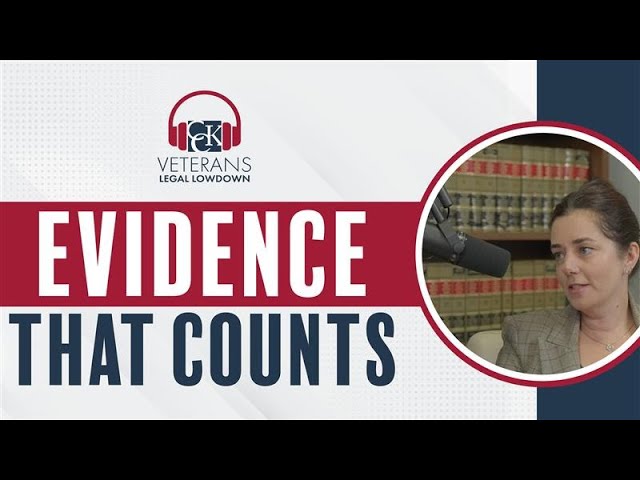
Watch CCK Law Partners Emma Peterson and Jenna Zellmer walk through the best types of evidence to submit at each stage of your claim and appeal:
How to Keep a Symptom Log
You do not need a special app or form. A simple notebook or phone note works. Consistency matters more than format. A few practical tips:
- Log daily, or as close to it as possible. Even a “no significant symptoms today” entry is useful. It shows your good days alongside your bad ones.
- Be specific. “My back hurt” is less useful than “Severe lower back pain, 8/10, lasted 4 hours after standing for 20 minutes at the grocery store; had to lie down.”
- Keep it honest. Only document what you actually experienced. Exaggerating symptoms is not only ineffective, but it can also undermine your credibility with VA raters and, in serious cases, can constitute fraud. At the same time, do not downplay symptoms, as this can have serious, long-term consequences.
- Date every entry. This is the most important step.
- Store entries somewhere safe. Back up digital logs. Keep paper logs in a secure place.
How Does a Symptom Log Become Evidence?
A symptom log is most powerful when it is submitted as part of a lay statement: a written statement describing your firsthand experience of your disability. Lay statements can be submitted to VA on VA Form 21-4138 (Statement in Support of Claim) or VA Form 21-10210 (Lay/Witness Statement). Family members, friends, or coworkers who observe your symptoms can submit their own lay statements as well.
Symptom logs are useful across multiple stages of the claims process:
- Initial claims—to document that symptoms began during or after service
- Rating increase claims—to show that symptoms have worsened over time
- Supplemental claims—as new and relevant evidence supporting a previously denied claim
- Board of Veterans’ Appeals—as direct evidence of symptom frequency and severity
Learn more about VA disability evidence on the CCK Law blog and in our overview of the types of evidence VA looks for.
Frequently Asked Questions
Can VA deny my claim based on my symptom log alone?
A symptom log alone may not be enough to establish service connection for a new condition; VA typically requires a medical nexus. However, logs are powerful supporting evidence, particularly for rating increases or supplemental claims where service connection is already established.
Does VA have to consider my symptom log?
Yes. Under 38 U.S.C. § 5107(b), VA has a duty to consider all evidence submitted with your claim, including lay evidence such as symptom logs and personal statements.
Should I bring my symptom log to a C&P exam?
Absolutely. Bring a printed copy and reference specific entries if the examiner asks about frequency or severity. Your log can help ensure the examiner’s report accurately reflects your condition.
What if my symptoms do not happen every day?
Document that too. For many conditions, including PTSD, migraines, and asthma, VA’s rating criteria are specifically based on how often symptoms occur. Intermittent symptoms are still ratable symptoms.
Getting Help with VA Evidence Issues
Symptom documentation is one piece of a larger evidence picture. Read more on our blog about the full range of VA disability evidence and how continuity of symptoms can support service connection.
Disagree with a VA decision? VA-accredited law firms may be able to help with next steps, including anything from legwork with data collection to interpreting VA arguments to identifying the most useful evidence. Contact CCK Law online or at 800-544-9144 if you would like us to consider your case.