100% Permanent and Total (P&T) VA Disability Ratings: FAQ


What Is a Permanent and Total Disability VA Rating?
Permanent and Total disability, or P&T, refers to veterans whose disabilities are total (rated 100 percent disabling by VA) and permanent (have zero or close to zero chance of improvement).
Though “Permanent and Total” is often used as a single phrase, veterans can have a total disability that is temporary, or a permanent disability rated less than 100 percent. Permanent and total ratings are protected from being reduced and may entitle you or your dependents to additional VA benefits only offered to veterans with total disability ratings.
Total — Veterans’ disabilities are rated based on VA’s Schedule of Rating Disabilities. The rating levels for each type of disability are based on how much that disability impairs your ability to function in life and at work. A 100 percent rating indicates that your disability is completely, or “totally,” disabling.
Permanent — VA deems a disability “permanent” when it is reasonably certain, based on medical evidence, that the level of impairment will continue for the rest of the veteran’s life. For this reason, VA is allowed to take age into account when determining whether a disability is permanent, so it can be more difficult for younger veterans to be considered permanently disabled.
There are a few combinations of disabilities that are automatically deemed Permanent and Total, including the irreversible loss or loss of use (for example, amputation or paralysis) of:
- Both hands
- Both feet
- One hand and one foot
- Sight in both eyes
- Becoming permanently helpless or bedridden
There are a few scenarios in which a disability is less likely to be rated P&T:
- VA awards temporary total disability (100 percent rating) to veterans who are hospitalized for more than 21 days for a service-connected condition and for the six months following that hospitalization.
- Some totally disabling mental health disorders and cancers are not considered permanent because, according to VA, they are expected to improve with treatment.
Who We Are: Chisholm Chisholm & Kilpatrick (CCK Law) has argued many of the cases that define and clarify veterans disability law. Our attorneys serve in many leadership positions and have posted more than 2,500 blogs and 1,100 videos explaining veterans benefits. With 100+ individuals accredited by VA or admitted to practice before the U.S. Court of Appeals for Veterans Claims, CCK Law has recovered over $1 billion in compensation for 36,000+ clients since 1999. (Past results do not guarantee future outcomes.) Contact us to tell us about your case.
Watch CCK Law Partners Bradley Hennings, Christine Clemens, and Emma Peterson discuss what veterans need to know about VA permanent and total disability ratings:
Can VA Reduce a Permanent and Total Rating?
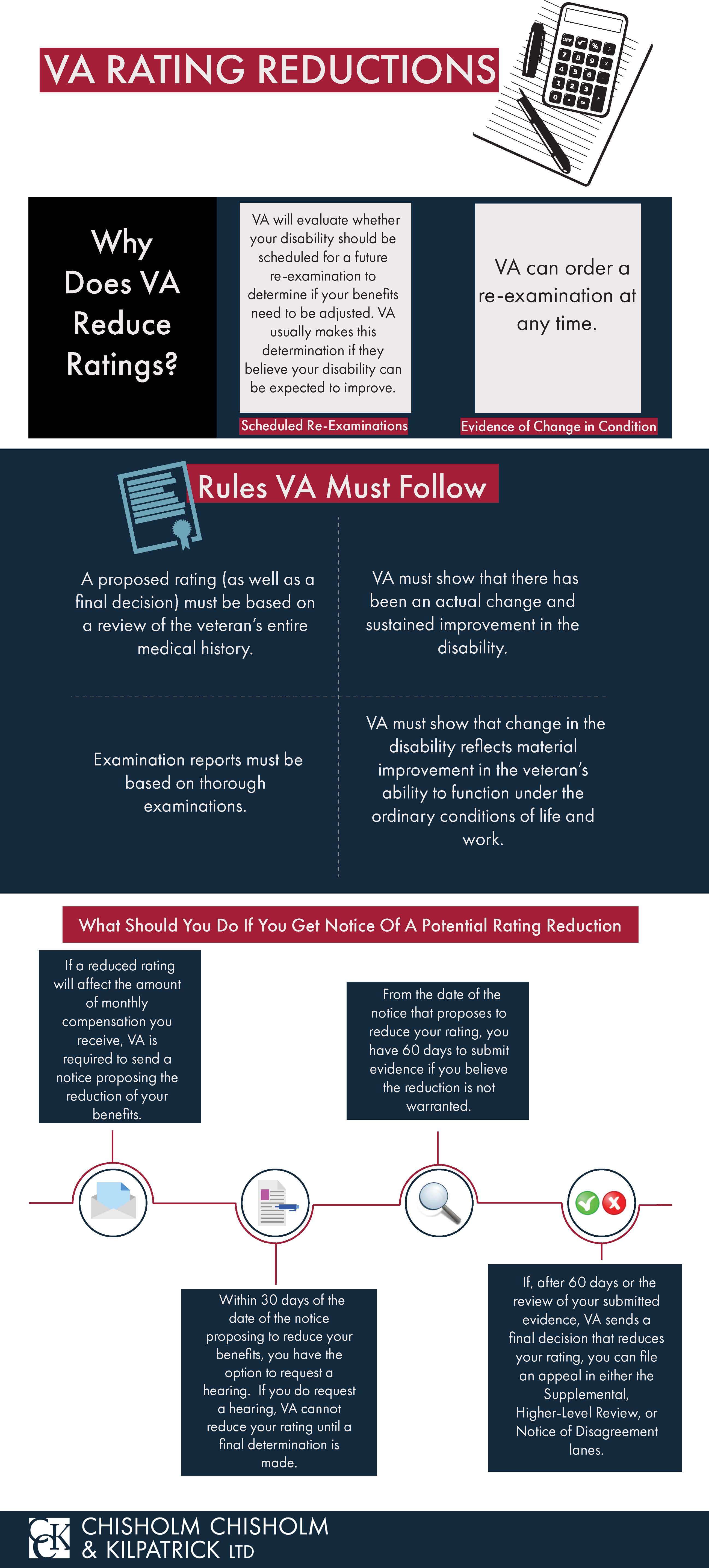
Yes, but only in rare circumstances, such as evidence of fraud.
Those who are awarded Permanent and Total disability VA benefits will generally not receive reexaminations that could lead VA to reduce or revoke the rating. Therefore, a veteran who has correctly received a Permanent and Total rating can generally assume they will receive the benefits for that rating for the rest of their life.
But it is possible for VA to propose a revocation or reduction based on evidence obtained from other sources, such as a medical exam for a different claim.
However, veterans should not overthink the risks if it costs them benefits that they have earned by law. It is important to know that:
- VA is required by law to give veterans an opportunity to challenge proposed rating reductions before they take effect.
- Many rating defenses and protections exist, especially for VA ratings that have existed for some time.
- VA-accredited advocates and attorneys have experience and tools that can make it much easier to defend your rating. If you feel a rating reduction is wrong, consider asking for help. Do not delay, because it is much easier to challenge a rating reduction/revocation proposal within the first few weeks.
How Can I Tell if My VA Disability Rating Is Permanent?
Look at the decision letter VA sent you when granting benefits (your Rating Decision).
- On some Rating Decisions, there is a Permanent and Total box that will be checked if your 100 percent disability rating is permanent.
- On others, there may be language like “Eligibility to dependents Chapter 35 DEA / CHAMPVA are established” or “No future exams are scheduled” – both of which indicate permanence. The exact language may vary with different VA regional offices.
- If, however, the letter says that future exams are scheduled, then your total disability rating is considered temporary by VA.
Is VA Individual Unemployability (TDIU) Always Permanent?
No. TDIU (or simply IU) stands for Total Disability based on Individual Unemployability. This benefit may be available to veterans who are unable to work because of their disabilities. Veterans who receive TDIU benefits are paid at the 100 percent VA compensation rate, even if they may not regularly reach the 100 percent threshold.
In other words, if you receive TDIU, you are considered totally (100 percent) disabled even if your disability rating is less than 100 percent.
But TDIU can be permanent or temporary. So, it is important to check your rating decision as discussed above.
Can I Request a Permanent VA Rating?
If you believe (and you have evidence showing) that your total 100 percent disability is unlikely to improve at any point in the future, you can write a letter to your VA regional office requesting a permanent rating.
With your letter, you should include medical evidence (like treatment records) showing that your medical condition cannot be expected to improve in the future.
What Is the Difference Between 100 Percent VA Disability and 100 Percent Permanent and Total (P&T)?
Watch CCK Law Partner Maura Black discuss the difference between a total disability rating and P&T:
Why Is It Good To Have a 100% Permanent and Total VA Rating?
A permanent rating is unlikely to be changed, giving peace of mind and allowing disabled veterans to better plan their medical care and living situations.
A total disability VA rating pays at the maximum “schedular” compensation amount. (Special Monthly Compensation does pay more.)
Veterans with Permanent and Total ratings may also be eligible for additional benefits:
- CHAMPVA (VA health care for your dependents)
- Chapter 35 Dependents Educational Assistance Program (Chapter 35 DEA)
- Dependency and Indemnity Compensation (DIC), often referred to as “death benefits”
- Certain state-level benefits only for P&T veterans (varies by state)
Note: Other factors may also be considered in determining eligibility for these benefits.
Dependency and Indemnity Compensation: Both CHAMPVA and Chapter 35 DEA require the veteran to be P&T (permanently and totally 100 percent disabled). For DIC, however, eligibility depends on how long the veteran has been considered P&T.
- If the veteran’s condition was rated P&T for 10 years immediately prior to their death, their dependents will be eligible for DIC.
- If the veteran’s condition was rated P&T for less than 10 years prior to their death, their dependents will only be eligible for DIC if the veteran died from a service-connected condition.
State benefits: Many states have special benefits for veterans who are permanently and totally disabled. Find out which benefits your state offers.
Chisholm Chisholm & Kilpatrick May Be Able To Help You
If you disagree with a VA decision, consider contacting Chisholm Chisholm & Kilpatrick. An experienced, VA-accredited law firm may offer significant tools and resources in support of your appeal.
While past results do not guarantee future outcomes, CCK Law has had favorable outcomes in 98.5% of its actions before VA and a 95% win rate before the U.S. Court of Appeals for Veterans Claims (federal court). We have recovered over $1 billion in compensation for 36,000+ clients to date.
Contact us online or at 800-544-9144 to tell us about your case.
Share this Graphic