
Can VA Reduce Your Rating If You File for an Increase?

CCK Law: Our Vital Role in Veterans Law
Filing for a VA disability rating increase is your right as a veteran, but many veterans hesitate, worried they might instead trigger a reduction in the benefits they already have. It is a fair concern, and with over 36,000 past and current clients, it is one we hear often at CCK Law. The short answer: yes, VA can reduce your disability rating when you file for an increase, but only under specific, legally defined circumstances. And there are concrete steps you can take to protect yourself or fight a proposed rating reduction.
In this article, learn what every veteran needs to know before filing.
Watch CCK Law Partner Maura Black and Lead Claims Advocate Claire Babcock explain what happens when VA reviews your file during an increased rating claim, when reductions can legally occur, why VA often gets these decisions wrong, and more:
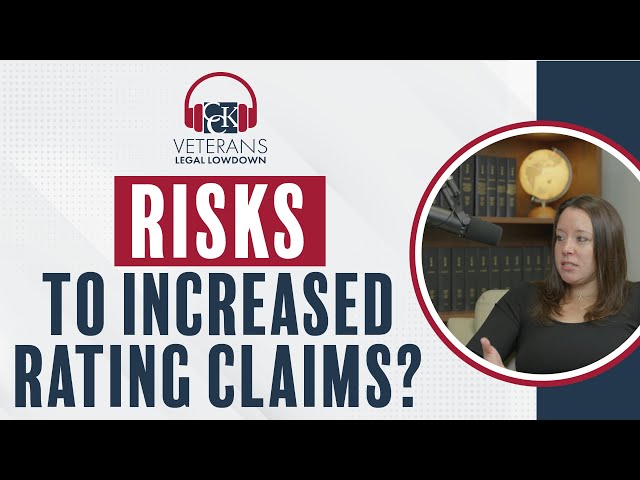
Can VA Reduce Your Disability Rating If You File for an Increase?
Yes, but only if VA finds evidence of sustained improvement in your condition under the ordinary conditions of life and work. The law, found at 38 C.F.R. 3.344, protects veterans from unjustified rating reductions. A reduction isn’t something VA can do arbitrarily or based on a single data point.
But when you ask VA to review your claim, it is entitled to reexamine your entire file, both the evidence related to your worsened condition and even unrelated conditions. This creates risk, given VA’s enormous number of medical examiners and claim adjudicators, that VA will reach different conclusions than it did before, from service connection to rating percentages.
What Exactly Happens When You File for a VA Rating Increase?
When you submit a claim for increased VA disability compensation, the Department of Veterans Affairs opens a review of your service-connected condition. This process typically involves:
- A review of your entire claims file, including all past examinations and medical records
- A VA Compensation & Pension (C&P) examination, where a VA examiner evaluates the current severity of your condition
- An assessment of whether your condition has improved, stayed the same, or worsened
Most of the time, this process results in an increase or no change. However, if the new examiner or claim adjudicator reach the conclusion that any of your conditions have improved, VA may propose a rating reduction.
When Can VA Legally Reduce Your Rating?
Under 38 C.F.R. 3.344, VA must meet a high legal bar before reducing a disability rating. A reduction is only justified when there is sustained improvement under the ordinary conditions of daily life, not just a better result on one exam. VA must look at your actual functional capacity: how your condition affects your ability to work, manage daily activities, and live your life.
Common situations where a reduction may be legally appropriate include:
- Temporary 100% ratings for active conditions: Conditions like active cancer are rated at 100% during active treatment. Once the cancer goes into remission, VA is required by law to reduce that rating and evaluate based on residuals. This reduction is built into how VA handles those claims.
- Conditions that are expected to improve: If your service-connected condition is one that is temporarily severe but known to improve with treatment — or potentially resolve altogether — VA may reduce your rating if the medical evidence supports improvement.
- Medical records showing genuine improvement: If your treatment records consistently document improvement over time, VA may use that as a basis for reduction.
Where VA Gets It Wrong and Why You Should Fight Back
One of the most common and frustrating VA errors is reducing a rating based on a single C&P examination. The law is clear: VA is not permitted to reduce a rating based on one exam alone. Despite this, it happens all the time.
Here’s a typical scenario: A veteran files for an increase to pursue Total Disability based on Individual Unemployability (TDIU). VA schedules a C&P exam. At that exam, the range of motion measurements come back slightly better than the last exam on file. VA then proposes a reduction, based entirely on that one visit. This is legally improper, but it happens regularly.
The key issue is context. A small mechanical improvement on a single exam day does not mean your condition has genuinely improved under the ordinary conditions of your life. If your back still causes functional impairment, limits your ability to work, and disrupts your daily routine, VA is required to consider all of that, not just the numbers on one exam report.
How to Protect Yourself When Filing for a VA Disability Rating Increase
The good news: there are real, actionable things you can do to minimize the risk of an improper reduction.
1. Work with a VA-Accredited Attorney or Claims Advocate
A VA-accredited attorney or claims advocate can review your increased-rating claim before you file, identify any vulnerabilities, and help you build the strongest possible claim. If a reduction proposal does come in, having professional representation is one of the most effective ways to challenge it.
2. Submit Evidence That Documents Your Current Condition
Because VA is required to consider your entire file, you have the opportunity to add to it. Gather and submit medical records, treatment notes, and personal statements that demonstrate your condition is not improving or is worsening. Buddy statements from family members, friends, or coworkers who can speak to how your condition affects your daily life can also be powerful.
3. Attend Your C&P Exam and Be Honest and Thorough
If VA schedules you for an examination as part of the review, attend it. Skipping the exam can result in an unfavorable decision. When you are there, be honest, specific, and thorough. Do not minimize your symptoms on a day you happen to feel a little better; your rating should consider “flare-ups” as well. If applicable, explain to the examiner that your condition is inconsistent: while today may not be your worst day, describe what your worst days look like and how frequently they occur.
Consider writing down your symptoms for the week before the exam, so you have specifics ready. Bring any documentation that contextualizes your condition, such as a flare-up log, recent treatment records, or a personal impact statement.
4. Understand Your Rating Protections
Certain VA disability ratings carry legal protections that make reductions significantly harder for VA to justify. These include rating stabilization rules that apply after your rating has been in place for five years, ten years, or twenty years, or if you are at least 55 years old. If your rating has been in place for an extended period, these protections may apply to you and could be an important defense against a reduction proposal. Speak with a VA-accredited law firm to understand whether your specific rating qualifies.
How to Ask for Help (Especially If VA Proposes to Reduce Your Rating)
Appealing a rating reduction can be challenging. If VA unfairly decides to reduce your rating, an experienced, VA-accredited law firm may be able to help. To tell us about your case, call our office at 800-544-9144 or contact us online.
Remember that rating reduction proposals have a limited window for responses, so contact us as soon as possible to keep your options open.
Frequently Asked Questions
Can VA reduce my rating without scheduling an exam?
VA typically schedules a C&P exam as part of the review process when you file for an increase. However, VA can propose a reduction based simply on evidence already in your file. Any reduction proposal must still meet the legal standard of sustained improvement under the ordinary conditions of life and work.
What should I do if VA proposes a rating reduction?
Do not ignore a reduction proposal. VA is required to provide advance notice and an opportunity for you to respond before a reduction takes effect. Use that window to submit additional evidence, request a hearing, or consult with a VA-accredited attorney who can evaluate the proposal and help you respond.
Is it still worth filing for a VA rating increase?
For most veterans, yes. The majority of service-connected conditions worsen over time rather than improve, which means the risk of reduction—while real—is relatively low when evidence is managed properly. Veterans should not be discouraged from pursuing the disability benefits they have earned. With the right preparation, the risk of a reduction can be significantly minimized.
Disagree with a VA Decision? Contact CCK Law
If VA has made a decision that you disagree with, the large, dedicated team at Chisholm Chisholm & Kilpatrick may be able to assist. Our VA-accredited attorneys and experienced advocates have secured favorable outcomes for 99 percent of our past clients before VA and 95 percent of our cases in federal court, helping us recover over $1 billion in wrongfully denied benefits.
Call CCK Law at 800-544-9144 or contact us online for a free case evaluation.


